

When Siemens rolled out RPA across its invoice processing pipeline, it cut processing time by 70%. Unilever cut vendor onboarding from 6 weeks to under 5 days after automating compliance checks and document collection. That's not a pilot result, that's what happens when you stop asking humans to do what bots do better.
Whether you're a CPO evaluating platforms or a finance lead trying to control tail spend, this guide covers what works, which tools to consider, and how to build something that scales.
Why Procurement Leaders Are Investing in Hyperautomation in 2026
Procurement inefficiency isn't just ‘office’-related; it's working capital, supplier and competitive speed-related. For those companies that implement hyperautomation in their procurement processes, according to Gartner research, organisations implementing procurement automation can reduce procurement process costs by up to 30% and shorten cycle times by as much as 50%.
Procurement leaders are heading towards hyperautomation in 2026 for the following reasons:
•Supply chain volatility: It is not easy to replace the vendors, and the unstable international supply chain has been a shock to post-pandemic activities. Automated vendor onboarding and real-time dashboardsard help teams have faster visibility.
•Cost pressure on indirect spend: CFOs are requesting spend control. Implementing procurement, in particular spend intelligence, can't be done manually at scale.
•Digital transformation mandates: Infrastructure is being put in place for enterprise-level deployments of source-to-pay and procure-to-pay software through key ERP modernisation projects and cloud migration.
•Regulatory complexity: Compliance requirements for ESG, Data privacy and Financial audit trail are growing for suppliers.
With automated workflows, there's no need to recruit new staff members to reduce compliance risks. Hyperautomation is the fastest-moving trend when it comes to strategic procurement infrastructure investments, which include sourcing, contracting, purchasing, invoicing and payment, all in one integrated system.
What Is Hyperautomation in Procurement?
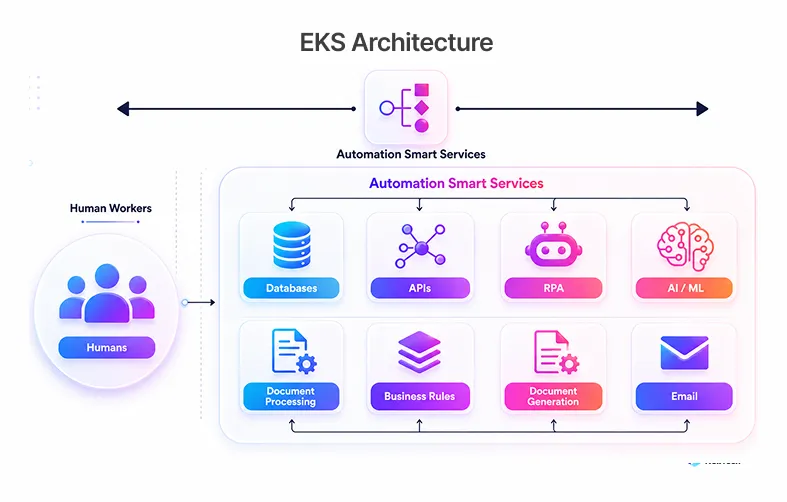
Hyperautomation in procurement is a multi-layered process that involves using Robotic Process Automation, Artificial Intelligence, Machine Learning and Process Intelligence to automate all procurement processes, from supplier discovery to supplier onboarding, purchase order generation, invoice processing and payment reconciliation.
Key Technologies Behind It: RPA, AI, and ML
The core technologies behind procurement hyperautomation are RPA, AI, and Machine Learning. Hyperautomation in procurement is not just about one product; it's an ecosystem of complementary technologies that collaborate throughout the procurement process:
- Robotic Process Automation (RPA): RPA automates structured, repetitive processes like invoice data extraction, creation of Purchase Orders, updating of vendor master data, 3-way match check, etc. UiPath, Automation Anywhere and Blue Prism are among the top robotic process automation service providers.
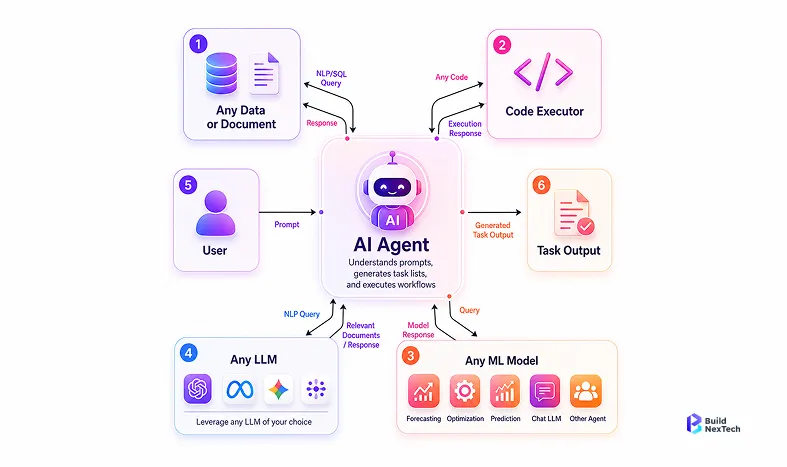
- Artificial Intelligence (AI): AI is used to deal with unstructured data, like reading contracts, analysing supplier risk indicators, analysing invoices in a wide range of formats, and routing exceptions. With AI, hyperautomation is capable of more than just RPA software.
- Machine Learning (ML): ML algorithms leverage procurement data that gets gathered over time, providing greater accuracy in spend categorisation, predicting vendor payment trends, detecting maverick spend and improving the accuracy of supplier spend analysis each cycle.
- Process Intelligence: Process mining tools can be used to get a picture of the real process, and to do that, they can be used to compare the real process with the desired process, so that they can identify the gaps and bottlenecks before they can start using automation tools.
- Natural Language Processing (NLP): Not requiring any SQL to ask questions of the system, to generate supplier summaries or even to create procurement analytics dashboards.
Hyperautomation is enabled by other technologies integrated on a cloud-based procurement platform and forms a procurement function that is faster, more accurate and less manual.
How RPA Transforms Vendor and Purchase Cycles
The execution layer of procurement hyperautomation is robotic process automation (RPA). AI empowers judgment, ML empowers pattern recognition, and RPA empowers the high-volume, rule-based tasks that eat up procurement teams' time, such as creating purchase orders, processing invoices, updating vendor information and routing for approval.
The three measurable benefits of implementing RPA in the vendor and purchase process are reduced transactional errors in transactional processes, reduced cost per transaction in procurement processes, and shorter time to complete the cycle.
Invoice Processing and Order Management Automation
An application that has the greatest impact on procurement using RPA is invoice processing. Invoicing by hand can be slow and cumbersome, prone to mistakes, and impossible to scale. An RPA bot can:
• Extract invoice data from PDFs, emails and supplier portals using Optical Character Recognition (OCR) and Natural Language Processing (NLP).
• Match of purchase order and goods receipts is automatically performed.
• Follow routing rules to send exceptions to the right approver – no human triage.
• Automatically record receipts of payment and update the vendor record in ERP.
If RPA takes care of all aspects of invoice processing, procurement teams are able to transition from invoice processing tasks to managing exceptions, which opens up capacity to focus on strategic sourcing and supplier management.
RPA Use Cases in Procurement
Robotic process automation tools can make an impact on the entirety of the procurement process, beyond invoice processing. The top RPA use cases in procurement are:
• Vendor master data management: Automated validation, deduplication and enrichment of supplier data on ERP/procurement systems.
• Purchase requisition to PO conversion: Automated routing of approved purchase requisitions to purchase orders without any manual entry.
• Contract expiry monitoring: RPA bots keep an eye on the contract expiration date and initiate the renewal process before the expiration date.
• Compliance checking: Onset and renewal compliance with supplier certifications, insurance papers and regulatory paperwork.
• Goods receipt reconciliation: Administering automated reconciliation between delivery confirmations and purchase orders to promptly release payment.
These use cases shorten a procurement analyst's 60-hour work week to a matter of minutes or seconds, and with no variable of manpower to human error.
Automated Purchase Order Processing
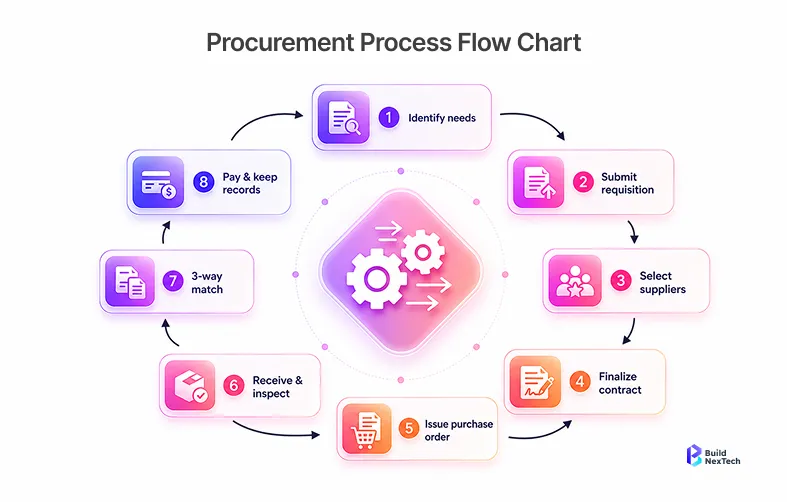
With the automated purchase order process, hyperautomation truly delivers the greatest benefits in the procurement function. A fully automatic procure-to-pay automates the entire process from the time it is approved until it is turned into a purchase order, submitted for delivery and finalised when the invoice is paid.
Mid-size to enterprise organisations with hundreds or thousands of purchase orders each month can find significant time savings through the cumulative effect. Most importantly, automated PO processing ensures no duplicate orders, no missed deliveries, and no late payments, which help to alleviate tension in vendor relations and reduce procurement expenses.
Vendor Onboarding Automation
One of the most time-consuming activities in procurement is vendor onboarding, and one of the best opportunities to automate. Typically, manual vendor onboarding requires weeks and involves various steps such as gathering supplier details, identity verification, compliance checks, bank details and access to the ERP system.
Automated vendor onboarding decreases the time to days or hours:
• Documents and data are gathered by self-service supplier portals from the supplier.
• Being able to verify tax ID, business registration, and insurance certificates with outside databases with RPA bots.
• AI detects risk indicators like matches with the sanctions list, negative news, or financial instability.
• The approved vendors will be automatically assigned to the right payment terms and category in the ERP & procurement platform.
Based on BuildNex Tech's implementation experience, vendor onboarding automation has cut onboarding cycle times from an average of 14 days to less than 3 days for enterprise procurement teams, with an increased compliance documentation rate of the supplier base.
Challenges and How to Overcome Them
While there is substantial value in hyperautomation in procurement, the implementation challenges are very real. The most frequently occurring ones are:
• Data quality gaps: RPA and AI are not particularly strong when fed with poor-quality data. To deploy automation without having to pre-cleanse vendor master records, harmonise spend categories and remove any inconsistencies in the ERP data.
• Change management resistance: procurement employees who are afraid of being replaced don't want to buy in. Automation isn't about jobs being lost; it's about jobs being replaced. Rather than worrying about the loss of jobs, just look at the change from transactional to strategic work.
• Integration complexity: Complexity means that it is crucial to make sure that the APIs you are utilising are designed and tested to smoothly link procurement automation with your historical ERP systems, supplier portals and banking platforms.
• Process standardisation: Automation requires the processes to be standardised. Teams with a high number of exception handling or 'workarounds' should develop repeatable processes to be automated.
The top ones view hyperautomation as a business transformation initiative, rather than an IT project. While technology is important, governance, change management and process design are equally important.
Must-Have Features: Spend Analysis, Contracts, Supplier Tools
Regardless of company size or industry, enterprise-class procurement software must excel in five key skill areas:
• Spend analysis: Real-time procurement spend intelligence , configurable spend categorisation, spend intelligence and supplier analysis dashboards. This is the underpinning of all cost reduction and compliance projects.
• Contract lifecycle management: Creation, negotiation and approval, expiry notification, automatic obligation tracking of contracts end-to-end.
• Supplier management: Supplier onboarding, performance scoring, risk management and communication management all within one supplier portal.
• Procure-to-pay automation: Automation of the procurement process – from requisition to PO, receipt to invoice – preferably with built-in RPA capabilities or open APIs for integration with RPA.
• Analytics and reporting: Configurable dashboards that reveal the savings realised, compliance rates, supplier performance and cycle time data without ever interacting with IT support.
Other platforms will need to integrate some of the bolt-ons, which will enable hyperautomation; otherwise, they won't have these features, or they will require extra integration.
SAP Ariba vs Coupa vs Jaggaer: A Quick Comparison
SAP Ariba, Coupa, and Jaggaer are the three dominant enterprise procurement platforms in the source-to-pay market. Each is built for different organisational profiles, procurement complexities, and ERP environments which is why platform selection is one of the most consequential decisions a CPO will make.
SAP Ariba is the natural choice for large enterprises already running SAP S/4HANA or SAP ECC. Its deep native integration with SAP ERP eliminates costly middleware and enables seamless data flow across finance, procurement, and supply chain. The Ariba Network the world's largest supplier network gives enterprises instant access to millions of verified suppliers globally. However, Ariba's complexity means implementation timelines are longer, and user adoption requires significant change management investment.
Coupa stands apart for its user experience and native AI/ML capabilities. Spend forecasting, anomaly detection, and supplier risk scoring are built directly into the platform no additional middleware required. Coupa's Community.ai feature uses anonymised spend data across its customer base to surface benchmarking insights that individual enterprises cannot generate on their own. It is the preferred choice for mid-market to enterprise organisations prioritising fast adoption and spend visibility.
Jaggaer is purpose-built for organisations with complex direct procurement needs manufacturing, life sciences, aerospace, and defence. Its strength lies in supplier collaboration, contract management, and category-specific sourcing workflows that generic platforms struggle to match.
¹ SAP Ariba delivers automation through SAP Business Technology Platform (BTP), a separate middleware layer that requires additional configuration and licensing.
² Coupa's AI/ML capabilities are built natively into the platform no additional middleware required, enabling spend forecasting, anomaly detection, and supplier risk scoring out of the box.
How to Evaluate Procurement Software for Your Business
The process of choosing procurement software vendors shouldn't be done just by watching a demo first. The selection process for procurement software vendors should be based on a structured evaluation approach, not a demo-first shortlist. A good assessment system includes:
- Process coverage audit: Draw a picture of your procurement processes and compare them with the native capabilities of each platform. Customisation requirements or bolt-on tools for gaps also introduce integration costs and risks.
- ERP integration depth: Check the ERPMatching of the connector between the procurement platform and the ERP (SAP, Oracle, NetSuite, Microsoft Dynamics). Native integrations are better than integrations through middleware.
- User adoption track record: Check customer references of user companies of comparable size, industry, and procurement complexity. However, if the adoption rate is low, it is irrelevant what capabilities the platform can offer.
- Total cost of ownership: License fees are just a part of the cost. Implementation, training, integration and continual customisation are often more expensive than license costs over 3 years.
- Automation roadmap: Ask about the vendor's commitment to AI, ML and RPA. Those platforms that are not actively pursuing automation will lag because of the increasing pace of hyperautomation.
Based on BuildNex Tech implementation experience for an enterprise procurement platform, which includes requirements mapping, demo scoring, reference checks, and proof-of-concept testing, before signing a platform contract, ideally over 8 weeks.
Cloud-Based vs On-Premise Procurement Software
The procurement software market has clearly moved to the cloud, and all three major players are primarily SaaS cloud-based. All three major procurement software vendors are SaaS cloud-based, with SAP Ariba, Coupa and Jaggaer dominating the market. Most companies report that cloud-based procurement software offers quicker rollout, reduced infrastructure costs, and ongoing feature updates without the need to upgrade.
For organisations that have stringent data sovereignty and security requirements, regulated industries that have particular compliance requirements, or organisations whose integrations with legacy on-premise ERP systems are complex and cannot be moved to the cloud, on-premise procurement platforms are still relevant. In most scenarios, a hybrid solution – cloud procurement platform securely linked via API to on-premise ERP – proves to offer the best of both worlds: agility of the cloud, compliance control of on-premise data handling.
Whether you are comparing source-to-pay software options or shortlisting procure-to-pay software vendors, the right platform depends on your ERP environment, transaction volume, and automation maturity. Enterprises looking for the best procurement software for enterprise deployments should prioritise platforms with native RPA, built-in spend analytics, and proven vendor onboarding automation capabilities. If you are ready to move forward, BuildNex Tech offers end-to-end procurement automation implementation services from platform selection and RPA procurement consulting to full deployment, helping your team achieve measurable results faster.
Procure-to-Pay vs Source-to-Pay: Which One Do You Need?
Procure-to-Pay (P2P) and Source-to-Pay (S2P) are distinct process frameworks that serve different automation needs. Before choosing procurement software tools or developing a hyperautomation plan, it is critical to grasp the difference between the two.
Procure to pay (P2P) refers to the operational purchasing cycle, which includes requisition, purchase order, goods receipt, invoice matching and payment. Source to pay (S2P) covers strategic sourcing activities that precede the P2P process, including supplier discovery, RFx management, contracting and category management.
How Both Models Fit into a Hyperautomation Strategy
Both process models are improved by hyperautomation, but at different stages of the procurement process and in different ways of automation:
- Procure-to-pay automation is all about transactional speed and accuracy. RPA creates the PO, extracts the invoices, performs a three-way match, and processes the payment. AI manages exception routing and fraud detection. The objective is to be able to procure to pay routine transactions without any manual effort.
- The source of pay automation brings intelligence upstream. Supplier discovery and risk scoring are assisted by AI. ML enables improved RFx analysis and bid evaluation. NLP speeds up the contract review and obligation extraction. The objective is to have a data-driven sourcing cycle, directly feeding into automated P2P execution.
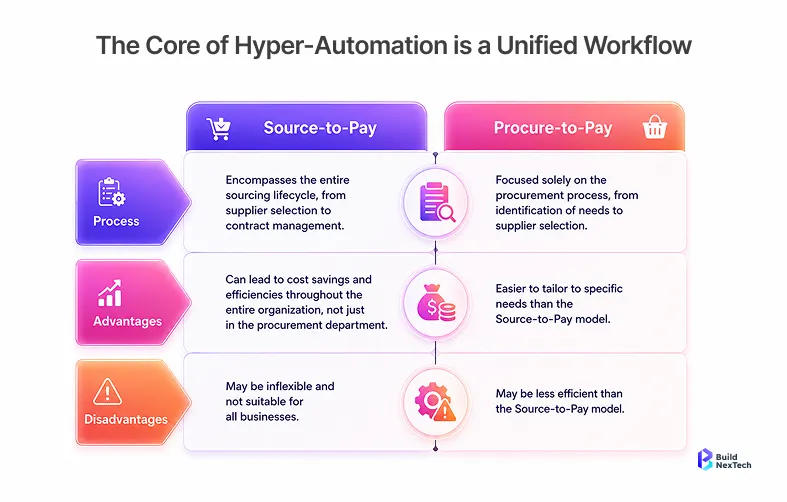
For organisations that are looking between procure to pay and source to pay software, it will come down to where the greatest procurement value is being lost. S2P is most beneficial for organisations with sourcing inefficiency. P2P automation works best for organisations with large volumes of transactions. Most enterprise organisations eventually need both and the best procurement software platforms provide a unified source to pay for a full suite of features.
Spend Analysis: The Engine Behind Smarter Procurement
Spend analytics is the starting point of any spend optimisation effort. You can't manage what you can't see, and most procurement organisations have blind spots with their spend data categorisation, consolidation and analysis by supplier, spend category and business unit.
Best-in-class procurement companies see 2–3x better spend visibility than typical companies, which in turn directly impacts spend savings, supplier consolidation and compliance.
Tools, Metrics, and Best Practices for Spend Analysis
To achieve effective procurement analytics, the three components play a crucial role: clean data, intelligent categorisation and actionable dashboards. Essential tools, metrics and practices are:
- Spend categorisation: AI-powered categorisation engines categorise spend against UNSPSC or custom taxonomies automatically and without the need for manual coding, which is slow, inconsistent and never up to date. This is fundamental for both supplier expenditure insights.
- Supplier consolidation analysis: Determine the number of suppliers for each business unit that satisfy similar needs. The best-in-class organisations cut their supplier base by between 20% and 40% with data-driven supplier consolidation while keeping supply security intact.
- Tail spend analysis: This usually accounts for 80 per cent of transactions and 20 percent of spend, and can be seen as the long tail of low-value, high-frequency spend. Manual review only recognises some opportunities for consolidation and catalogue, but automated spend intelligence recognises more.
- Savings tracking: Connect the outcome of the sourcing event to actual POs and invoices to determine if negotiated savings are realised in spend. Many organisations enter into contracts that do not translate to cost savings.
- Compliance rate monitoring: Monitor the percentage of spend coming through approved catalogues and contracted suppliers. The biggest cause of savings leakage is maverick spend, or spending on vendors not signed up to the contracted channels.
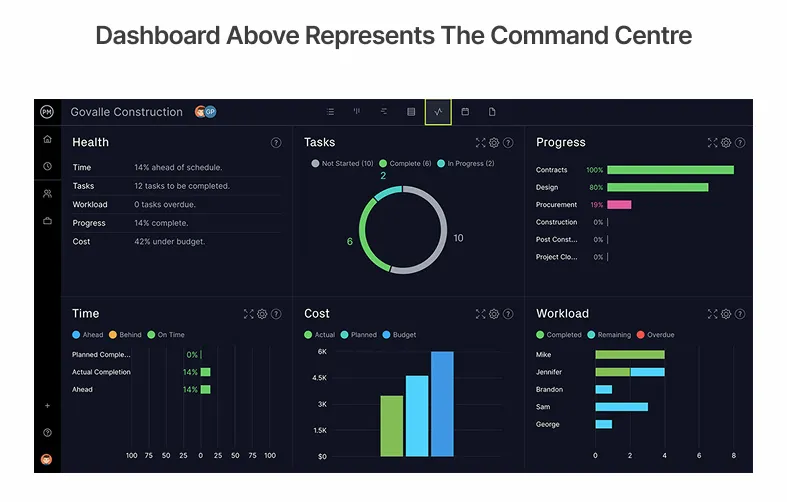
The best spend intelligence deployments go straight to the ERP and procurement system data sources and refresh automatically without having to pull data periodically. This real-time visibility is what makes spend intelligence a dynamic procurement management tool.
Conclusion: Building a Smarter Procurement Strategy with Hyperautomation
Now, hyperautomation in procurement is not an emerging trend; it's a competitive differentiator. Organisations that have adopted robotic process automation in their vendor-to-purchase cycle, integrating AI-driven automated vendor onboarding and source-to-pay automation, are realising procurement functions that are measurably faster, cheaper, and more compliant than those still operating manually.
What makes the difference is not the technology itself, but the discipline of starting with clean data, standardised processes, and a phased automation roadmap prioritising high-volume transactions like invoice processing, PO automation, and vendor onboarding first, then expanding to sourcing, contracting, and spend analytics.
Ready to modernise procurement operations? BuildNex Tech helps enterprises evaluate procurement platforms, automate vendor onboarding, deploy RPA workflows, and implement end-to-end source-to-pay automation. Schedule a procurement automation assessment to identify the highest-impact opportunities within your procurement process.
Choosing the Right Procurement Software
There will be dozens of different procurement software solutions available in the market by 2026, from the best-of-breed source-to-pay software to specialist spend intelligence software to modular procure-to-pay (P2P). It costs a lot to select the wrong platform. It's the foundation for all future automation and analytics.
People Also Ask

What is hyperautomation in procurement?
Hyperautomation in procurement is the application of RPA, AI, and Machine Learning to automate end-to-end procurement processes from vendor onboarding and purchase order processing to invoice management and spend intelligence — reducing manual intervention across the entire cycle.
How does RPA help procurement teams?
RPA helps procurement teams by automating repetitive, rule-based tasks such as purchase order creation, invoice processing, vendor data entry, and three-way matching, freeing up procurement professionals to focus on strategic sourcing and supplier relationships.
What is the difference between Source-to-Pay and Procure-to-Pay?
Source-to-Pay (S2P) covers the full procurement lifecycle from supplier sourcing and contract management through to payment. Procure-to-Pay (P2P) is a subset that starts from the purchase requisition stage through to payment, excluding the upstream sourcing and contracting activities.
Which procurement software is best for enterprise organisations?
Leading enterprise procurement platforms include SAP Ariba, Coupa, Ivalua, and Jaggaer all recognised in the Gartner Magic Quadrant for Source-to-Pay Suites. The best choice depends on your ERP environment, automation maturity, and specific procurement needs.
How much does procurement automation cost?
Procurement automation costs vary widely based on the platform, number of modules, and organisation size. Entry-level P2P solutions can start from $30,000 annually, while full enterprise Source-to-Pay suites can range from $100,000 to $500,000+ per year. ROI is typically realised within 12–18 months through cost savings and efficiency gains.


.webp)
.webp)
.webp)

.webp)
.webp)