
.png)
.webp)
Grok AI, developed by xAI, represents a new phase in the evolution of Artificial Intelligence where systems are expected not only to generate content but also to reason, act, and integrate with real-world tools. As enterprises move beyond experimentation, Grok AI is increasingly evaluated as an AI Agent, not just a conversational AI chatbot.
In 2025, Grok AI is positioned at the intersection of Agentic AI, Conversational AI, and real-time intelligence, making it especially relevant for software engineering teams, research organisations, and enterprises seeking operational automation. This article follows a strict structure, explains each concept once, and focuses on business value, technical capability, and enterprise risks, with a neutral, decision-maker-friendly tone.
The Evolution of xAI: Inside Grok 4 and Grok Heavy
The evolution of Grok reflects a broader trend across frontier AI companies: moving from static text generation toward action-oriented AI agents.
Grok’s Model Lineage
- Grok 3 focused on conversational fluency and fast interaction.
- Grok 4 introduced reasoning-first parameters and native tool usage.
- Grok 4 Heavy scaled those capabilities for enterprise-grade throughput and reliability.
This progression mirrors how AI companies are redefining success metrics—from prompt quality to task completion and operational impact. Grok 4 Heavy is particularly relevant for organisations running large-scale enterprise automation, reporting pipelines, or multi-agent systems that require predictable performance.
For many buyers, comparing Grok 3, Grok-4, and Grok 4 Heavy becomes a question of scale vs. interactivity, rather than raw intelligence alone.
.webp)
Origin and Vision Behind Grok AI
xAI positioned Grok as a truth-seeking AI assistant, designed to prioritise correctness, transparency, and live knowledge over polished but potentially misleading responses.
Core Design Philosophy
- Favour verifiable information over speculative answers
- Use tools instead of guessing
- Maintain a human conversational tone without sacrificing accuracy
This vision aligns closely with the agentic definition of AI: a system capable of making decisions, taking actions, and validating outcomes. Grok was never intended to be just another chat interface—it was designed as an AI agent platform component.
For enterprises, this distinction matters. A truth-seeking design reduces operational risk in domains like finance, security, and regulated industries.
What’s New in Grok 4?
Grok 4 introduced foundational changes that directly support agentic workflows and multi-step problem solving.
Key Enhancements
- Native tool calling (search, APIs, code interpreter)
- Reasoning-first architecture optimised for complex tasks
- Improved handling of long conversations and extended context
- Grok 4 Heavy tier for high-volume enterprise use
Instead of returning a single answer, Grok 4 can now:
- Break a problem into steps
- Call tools to validate assumptions
- Execute actions
- Synthesise a final output
These features place Grok 4 closer to agentic AI tools than traditional Generative AI systems.
Grok AI’s Position in the AI Ecosystem
Grok occupies a specific niche within the modern AI ecosystem: real-time, action-oriented intelligence.
How Grok Is Positioned
- Front-end orchestration layer for AI agents
- Conversational interface with operational depth
- Research and coding assistant with live web access
It competes with OpenAI, Gemini, and Anthropic, but Grok differentiates itself through real-time integration capabilities and multi-agent orchestration readiness. Organisations evaluating best AI models increasingly assess how well a model fits into existing systems, not just how well it writes.
The Technology Powering Grok AI
Role of Large Language Models (LLMs)
At its core, Grok is built on transformer-based large language models, but with architectural tuning that emphasises:
- Tool invocation
- Structured reasoning
- Action validation
This allows Grok to function as an AI agent tool, not merely a language generator. The model’s parameters are optimised to support hierarchical reasoning frameworks, making it suitable for complex enterprise workflows.
.webp)
Real-Time Data and Context Awareness
One of Grok’s strongest differentiators is native web access.
Practical Benefits
- Up-to-date market research reports
- Live incident summaries
- Real-time customer interactions
For enterprises, Real-Time Knowledge Access significantly reduces the risk of outdated decisions. Combined with an extended context window, Grok can manage long-running workflows without losing state.
Multi-Step Reasoning and Decision Making
Grok’s reasoning system allows it to decompose tasks into smaller actions:
- Understand intent
- Retrieve relevant data
- Execute tools
- Validate outputs
- Deliver recommendations
This structured approach is essential for multi-agent systems and reduces errors caused by hallucinations or malformed data.
Grok AI for Coding and Developers
.webp)
Agentic Coding Capabilities Explained
Agentic coding refers to AI systems that act within the development lifecycle.
With Grok, this includes:
- Reading repositories
- Running tests via code interpreter
- Detecting SQL command errors
- Suggesting validated fixes
These capabilities align Grok with agentic coding tools and emerging Vibe Coding workflows.
Code Generation and Debugging Support
Grok improves software delivery by:
- Generating runnable code
- Executing validation checks
- Identifying edge cases
- Reducing manual debugging cycles
For teams using CI/CD pipelines, Grok can function as a pre-review agent, catching issues before human review.
Speed vs. Accuracy in Programming AI
There is an unavoidable tradeoff:
- Faster models improve interactive pairing
- Slower reasoning modes improve correctness
Grok prioritises reasoning accuracy, while some GPT-4o deployments emphasise speed. Engineering teams should benchmark both approaches depending on whether accuracy or latency is more critical.
Integration With Developer Tools and Workflows
Grok integrates with:
- IDEs
- CI/CD pipelines
- GitHub workflows
- Grok desktop app environments
This makes Grok suitable for enterprise software development, project delivery, and internal tooling.
Grok AI in Conversational AI
Achieving Human-Like Conversations
Grok balances conversational tone with operational rigour, enabling:
- Human-like customer service agents
- Internal help desks
- Conversational AI agents for sales and support
Unlike purely scripted bots, Grok adapts to conversation flow while maintaining traceability.
Context Retention for Enhanced User Experience
With extended context windows, Grok can:
- Track long customer interactions
- Maintain investigation history
- Reduce repetitive questioning
This directly improves customer experience and operational efficiency.
Real-Time Responses and Dynamic Interaction
Because Grok accesses live systems, it can respond dynamically to:
- Security incidents
- Supply chain disruptions
- Customer support tickets
This is critical for time-sensitive enterprise environments.
Grok vs. The Giants: A 2025 Comparison
Grok vs. The Giants
This table highlights why Grok is often shortlisted for agentic AI examples, while others excel in different areas.
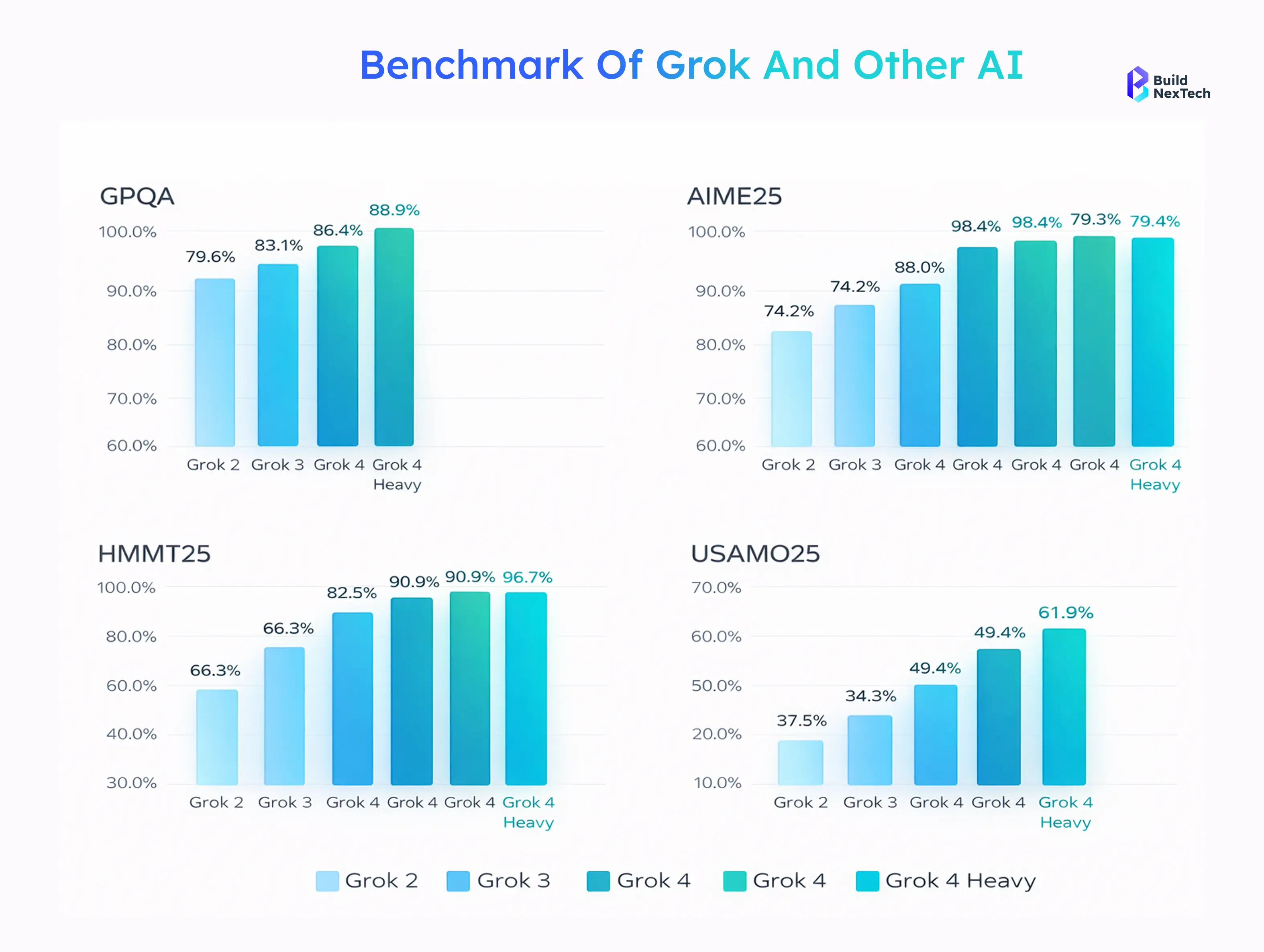
Why Real-Time Data is the Tie-Breaker
In environments where live intelligence directly impacts decisions, real-time data access becomes the deciding factor.
Static models rely on fixed training data, limiting their usefulness in fast-moving domains. Grok’s ability to access and reason over real-time information allows it to deliver current, context-aware insights rather than outdated summaries.
This advantage is critical for:
- Financial reporting: market movements, earnings updates, regulatory disclosures
- Incident response: live system logs, outage summaries, response coordination
- Market monitoring: competitive intelligence, trend analysis, breaking news
In these scenarios, accuracy depends on timeliness. Real-time access transforms AI from a passive assistant into an operational decision-support system.
Benefits and Limitations of Grok AI
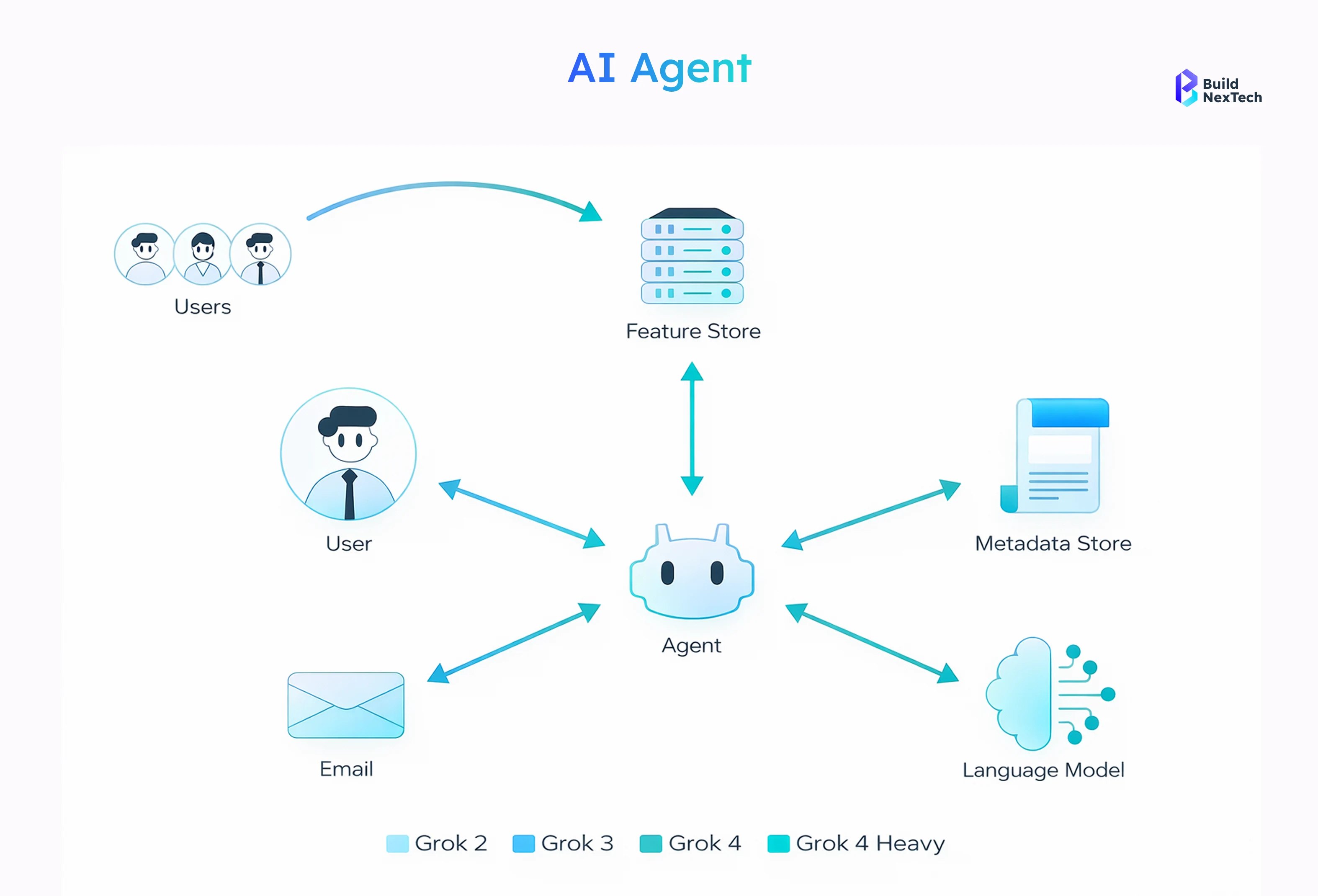
Key Advantages of Agentic AI Models
Grok exemplifies the benefits of agentic AI, where systems are designed to take structured actions rather than only generate text.
Key advantages include:
- Actionable outputs instead of static text
Grok can trigger tools, structure data, and support downstream automation rather than stopping at narrative responses. - Faster iteration cycles
Developers and analysts can move from question to validated answer more quickly through integrated reasoning and tool execution. - Improved decision support
By combining real-time data, reasoning, and context retention, Grok helps teams make informed decisions with less manual effort.
These strengths make Grok especially useful in enterprise workflows that demand speed, accuracy, and traceability.
Accuracy, Bias, and Reliability Concerns
Despite its advantages, Grok—like all advanced AI systems—introduces operational risks that must be actively managed.
Key risks include:
- Hallucinations
The model may still generate confident but incorrect outputs if verification steps are skipped. - Bias propagation
Training data and reinforcement learning processes can introduce biases that affect recommendations or summaries. - Over-automation
Agentic systems may take actions that should require human approval, increasing operational risk.
Mitigation requires deliberate controls, including sandboxing, human-in-the-loop approvals, monitoring, and audit trails. Enterprises should treat Grok as an accelerator—not an autonomous decision-maker.
Ethical and Security Considerations
As Grok expands into multimodal capabilities, including image-related features, regulatory and ethical exposure increases.
To deploy Grok responsibly, enterprises must enforce:
- Role-based access controls
Ensure only authorised users can trigger actions or access sensitive systems. - Audit logging
Maintain detailed records of prompts, actions, and outputs for compliance and investigation. - Security and compliance controls
Align deployments with internal policies and external regulations, especially in finance, healthcare, and government sectors.
Without these safeguards, the same features that enable productivity gains can also introduce unacceptable risk.
Leveraging Real-Time Intelligence for Market Analysis
Grok’s real-time capabilities make it particularly effective for market analysis and business intelligence use cases.
Typical applications include:
- Automated daily briefs
Summarising overnight news, market movements, and key updates for executives. - SEC filing summaries
Condensing lengthy regulatory documents into actionable insights. - Anomaly detection
Identifying unusual patterns in financial, operational, or customer data streams.
When governed properly, Grok enhances human decision-making rather than replacing it. The model surfaces insights quickly, while final judgment remains with analysts and leaders.
Use Cases of Grok AI in 2025
Software Development and Engineering
In engineering environments, Grok supports productivity by assisting across the development lifecycle:
- Automated code review
Identifying potential issues before human review. - Debugging assistants
Analysing logs, reproducing errors, and suggesting fixes. - CI optimization
Reducing build failures and accelerating release cycles.
These capabilities help teams ship faster while maintaining quality.
Business Intelligence and Decision Support
For business teams, Grok enhances visibility and responsiveness through:
- Live dashboards
Combining real-time data with narrative explanations. - Automated reporting
Reducing manual effort in preparing operational and financial reports. - Invoice processing
Extracting, summarising, and validating financial data at scale.
This shifts BI teams from manual reporting to strategic analysis.
Education, Research, and Learning
In academic and research contexts, Grok supports:
- Interactive tutors
Providing guided explanations and step-by-step reasoning. - Literature synthesis
Summarising large volumes of academic material. - Problem validation
Checking solutions and reasoning paths rather than just final answers.
These capabilities enable more personalised and up-to-date learning experiences.
Conclusion
Grok represents a clear shift from chat-based AI to action-oriented, agentic intelligence. Its strengths lie in structured reasoning, real-time data access, and deep enterprise integration. For organisations willing to apply governance, oversight, and security controls, Grok delivers meaningful gains in productivity, accuracy, and operational insight.
As agentic AI continues to mature, Grok is positioned not as a novelty , but as a serious platform for scalable, auditable automation across technical, analytical, and knowledge-driven domains.
People Also Ask

Can Grok AI operate offline?
Grok AI has limited offline functionality, typically relying on basic logic or prior context. Its full capabilities—real-time data access, advanced reasoning, and tool usage—require an active Internet connection.
Does Grok support multimodal inputs?
Yes, Grok supports multimodal inputs depending on its implementation. When connected to the Internet, it can process and reason across different input types more effectively.
Can Grok 4 be fine-tuned on private data?
Yes, Grok supports multimodal inputs depending on its implementation. When connected to the Internet, it can process and reason across different input types more effectively.
Does Grok support context caching?
Grok does not natively support long-term context caching. However, this can be implemented using external databases or memory systems integrated with Grok
How is Grok 4 priced?
Grok 4 uses a tiered pricing model based on usage volume, throughput, SLAs, and performance needs. Pricing can be customized to align with specific business requirements.


.webp)
.webp)
.webp)

.webp)
.webp)