

Zomato operates one of the world’s most advanced hyperlocal, real-time delivery infrastructures. Managing millions of concurrent users, geolocation data points, routing computations, and load-balanced API calls requires an engineering architecture that is resilient, scalable, and optimized for extremely low latency.
To keep deliveries fast and predictable, Zomato continuously processes live order events, traffic conditions, restaurant readiness signals, and delivery partner availability. This creates an ecosystem where every decision from dispatch to route optimization happens within milliseconds, powered by a strong combination of distributed systems and intelligent automation.
This blog looks at the technologies behind Zomato's system. These include microservices architecture patterns, hybrid cloud infrastructure, API integratthion, routing algorithms, observability stacks, and real-time geolocation tracking.
Five Key Areas This Blog Will Cover
- Microservices & Event-Driven Architecture
- Hybrid Cloud Infrastructure & Load-Balanced APIs
- Real-Time Geolocation Systems
- Intelligent Routing & Dispatch Algorithms
- Observability, Monitoring & Fault Tolerance
Understanding Zomato’s Hyperlocal Commerce Model
Zomato’s hyperlocal commerce model revolves around delivering food, groceries, and essentials within minutes. At its core, the product uses cloud-based infrastructure, distributed microservices, and a real-time compute pipeline capable of ingesting thousands of events per second.
Core Characteristics
- Geographic proximity as a fundamental constraint
Hyperlocal platforms use geolocation information, IP-based geolocation, Google Maps API pricing–optimized queries, and GPS telemetry to ensure minimal delivery radius.
Techniques like latency-based routing, geographic location–based routing, and dynamic routing reduce hop count and route path inefficiencies. - Real-time processing and notifications
From order status changes to driver assignment, Zomato relies on SMS API, web push, SendGrid API, and webhook vs API architectures to deliver instant updates with minimal latency. - High delivery availability
Using AWS microservices, Amazon Route 53, Cloudflare API, Cloudflare Argo, and multi-region failover, Zomato ensures APIs remain responsive even during high traffic events. - API-driven, modular design
FastAPI, REST API principles, and API design best practices make the platform extensible for merchants, partners, and payment integrations like Stripe API and Payment API systems.
How Real-Time Orders Flow Through Zomato’s System
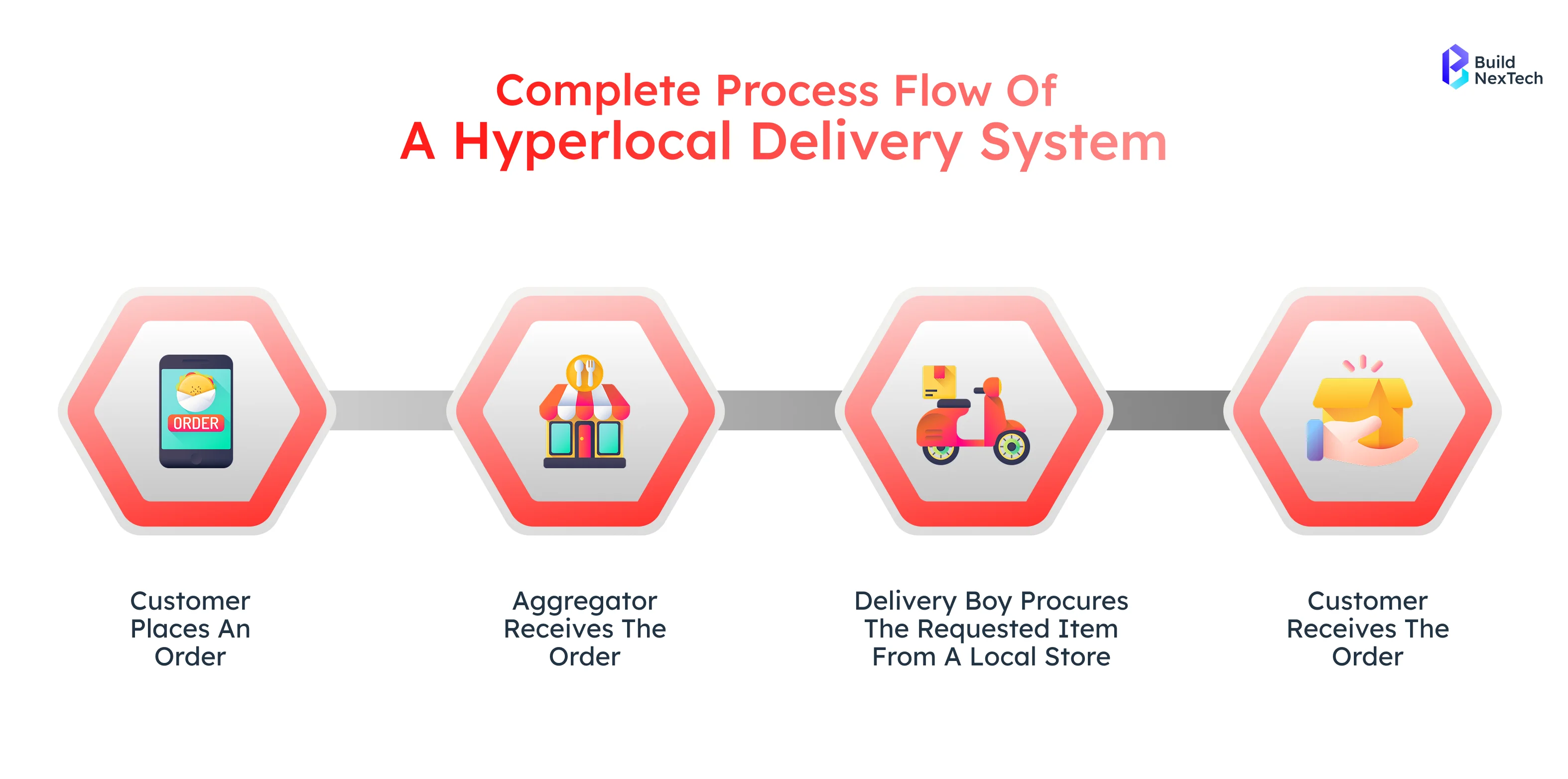
Every order on Zomato triggers a sequence of tightly connected real-time events — from user selection and restaurant confirmation to delivery partner assignment and live tracking. Each stage relies on distributed services, low-latency APIs, and continuous data updates to ensure that orders move seamlessly through the system. This real-time flow is what enables Zomato to deliver accurate ETAs, fast dispatching, and smooth user experience at scale.
The moment a user taps “Place Order,” hundreds of micro-interactions unfold across distributed systems.
Order Creation to Delivery Flow
- Frontend Microservices & Client-Side Router Activation
Zomato’s SPA architecture uses front-end microservices, Angular Router, Vue Router, and browser APIs to validate cart items, resolve route parameters, and compute dynamic menus. - API Gateway Invocation
Requests flow through AWS API Gateway or Cloudflare edge functions, which authenticate tokens, apply middleware functions, and forward calls to the appropriate service mesh in microservices. - Backend Microservices Processing
- Order service validates menu data
- Inventory service checks real-time availability
- Payment microservice invokes the Payment API (Stripe or internal)
- Notification microservice triggers SMS and webhook events
- Order service validates menu data
- Routing Table & Assignment Engine
Zomato’s delivery fleet is mapped into routing tables, geolocation clusters, and micro-regions. The platform uses:- Dijkstra’s algorithm for shortest path estimation
- Bellman–Ford algorithm for weighted network considerations
- Path-vector routing for inter-region routing behavior
- Distance-vector protocol logic for location-based ETA updates
- Dijkstra’s algorithm for shortest path estimation
- Restaurant → Delivery Partner → Customer Hops
Every movement is modeled through routing communication events, hop count calculations, and network traffic optimization.
Smart Routing & Delivery Optimization at Zomato
Zomato’s smart routing engine uses real-time geolocation, AI models, and dynamic routing algorithms to assign the best delivery partner instantly. It evaluates traffic, prep time, and rider availability to calculate precise ETAs. This ensures faster deliveries and highly optimized route efficiency.
Dynamic Assignment & ETA Engine
Zomato’s Dynamic Assignment & ETA Engine uses real-time location data, AI-driven prediction models, and routing algorithms to select the most efficient delivery partner. It continuously recalculates ETAs based on traffic, prep time, and rider movement for high accuracy.
Routing and assignment are Zomato’s strongest competitive moats. Their system evaluates:
- Live courier geolocation tracking
- Predicted prep time (PPT) using artificial intelligence
- Dynamic routing tables and route handlers
- Real-time traffic data from Google Maps API
- Network routing metrics & local area network considerations
- Restaurant load and queueing models
Zomato’s ETA engine blends AI/ML, network routing, and routing algorithms to deliver accurate estimates.
It also uses autonomous systems routing logic, AWS Transit Gateway, and edge-optimized microservices deployed in containers.
The system selects the best rider using:
- Route path efficiency
- Hop count minimization
- Vehicle type
- Traffic conditions
- Order density in the area
This dynamic-selection model maximizes user experience and reduces delivery delays.
Live Menu, Inventory & Real-Time Notifications
Zomato’s ability to show live menus is powered by real-time syncing, distributed caching, and webhook-based event streams.
Instant Updates via Push & Webhooks
- Merchant Updates
Restaurants update menu items via partner dashboards. These changes propagate using:- Webhooks: Event-driven callbacks that instantly push updates from one system to another.
- API integration: Connecting applications through structured API calls for seamless data exchange.
- Kafka event streams: High-throughput real-time streams used to publish and consume continuous data events.
- Cache invalidation workflows: Processes that clear or update cached data to maintain fresh, accurate information.
- Webhooks: Event-driven callbacks that instantly push updates from one system to another.
- Instant Customer Notifications
Users receive updates through:- Push notifications: Instant alerts sent to user devices for real-time updates.
- WebSocket streams: Persistent two-way connections enabling live data transmission.
- SMS APIs: Programmatic services used to send text messages to users instantly.
- Email (SendGrid API): Cloud-based email delivery API for fast, reliable transactional emails.
- Push notifications: Instant alerts sent to user devices for real-time updates.
- Server-Side Routing for Notification Events: Notification aggregation servers route and deliver messages reliably, ensuring they reach users even during peak network traffic.
This entire layer relies on cloud infrastructure components such as:
- Load-balanced web servers: Distribute traffic evenly to maintain speed and availability.
- Server-side routing: Directs requests on the backend to the correct service or endpoint.
- Cloud infrastructure automation: Automates provisioning, scaling, and deployment of cloud resources.
- Cloud infrastructure monitoring tools: Track performance, health, and anomalies across cloud systems.
- High-availability storage: Redundant, fault-tolerant storage designed to prevent data loss and downtime.
Zomato’s Load-Balanced API Infrastructure
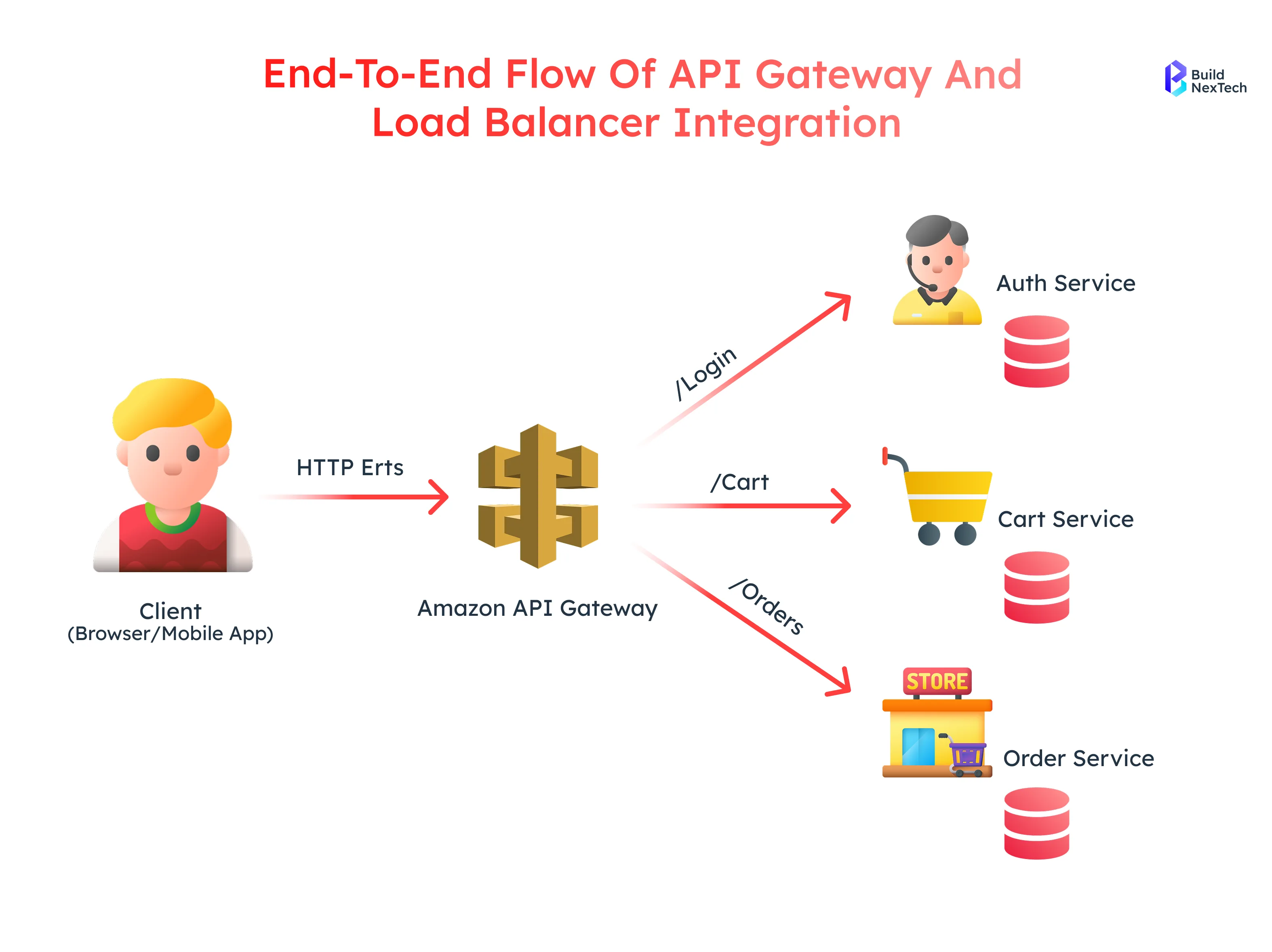
Zomato’s load-balanced API infrastructure distributes traffic efficiently across multiple servers to ensure high availability and low latency. It combines API gateways, caching, and failover mechanisms, along with AI development services, to handle millions of requests reliably, enabling smooth real-time order processing and integration with external services.
Gateway, Caching & Failover Strategy
Zomato handles billions of API calls each month. To keep API management predictable and reliable, the company uses a multi-layered strategy:
- API Gateway & Layer 7 Load Balancing
- AWS API Gateway: Managed service for routing, securing, and scaling API requests.
- NGINX ingress: Kubernetes ingress controller that manages and balances incoming traffic.
- Cloudflare Magic Transit: Network security and traffic acceleration service for protecting and optimizing IP networks.
- AWS API Gateway: Managed service for routing, securing, and scaling API requests.
- Caching
- Redis caching: High-speed in-memory data store used to serve frequently accessed data quickly.
- CDN edge caching: Caches content at edge locations to reduce latency for global users.
- In-memory micro-cache per service: Small, service-level cache storing fast-access data within each microservice.
- Redis caching: High-speed in-memory data store used to serve frequently accessed data quickly.
- Failover Mechanisms
- Multi-region AWS deployments: Deploying services across multiple AWS regions for resilience and low latency.
- Active-active failover: Running multiple live environments so traffic switches instantly if one fails.
- Cloud hybrid infrastructure: Combining on-premise and cloud environments for flexible, scalable operations.
- Canary deployments for new API releases: Gradually releasing updates to a small user group to ensure stability before full rollout.
- Multi-region AWS deployments: Deploying services across multiple AWS regions for resilience and low latency.
- API Security
Zomato implements:- OAuth / JWT: Authentication and token-based authorization for secure API access.
- Google API Key restrictions: Limits API key usage to approved domains, IPs, or apps for security.
- Rate limiting: Controls the number of requests allowed to prevent overload or abuse.
- WAF rules: Web Application Firewall filters that block malicious traffic and attacks.
- Bot filtering: Detection and blocking of automated or harmful bot activity.
- OAuth / JWT: Authentication and token-based authorization for secure API access.
- API Testing Tools
- SoapUI: Tool for functional and contract testing of APIs
- JMeter: Tool for performance and load testing APIs
- Postman API: Tool for manual and automated API testing
- SoapUI: Tool for functional and contract testing of APIs
- API Cost Optimization
- Google Maps API pricing monitoring: Tracking usage and costs to optimize geolocation API expenses.
- ChatGPT API pricing optimization for ML features: Managing AI API costs while leveraging ML-driven capabilities.
- Google Gemini API pricing for AI-driven recommendations: Monitoring and controlling expenses for AI recommendation services.
- Google Maps API pricing monitoring: Tracking usage and costs to optimize geolocation API expenses.
This architecture ensures API requests always reach the correct service with minimal latency.
Geolocation & Real-Time Tracking at Scale
Zomato’s geolocation and real-time tracking system continuously monitors rider and order locations to ensure accurate deliveries. By leveraging GPS data, IP-based geolocation, and scalable cloud infrastructure, along with cloud infrastructure management services, the platform updates routes and ETAs in real time, enhancing efficiency and customer experience.
Zomato handles millions of geolocation tracking events per minute. Tracking relies on:
- GPS coordinates from rider smartphones
- Geolocation tools and IP-based geolocation methods
- Packet-switching networks for real-time updates
- Amazon VPC for private routing
- Routing protocols and network hardware (switching equipment, optical transceiver modules)
The system continuously updates:
- Route parameters
- Rider route path
- ETA adjustments
- Live map visualization
- Traffic overlays
All this helps maintain accurate real-time delivery visibility.
Observability & System Insights
Zomato’s observability stack uses metrics, logs, and distributed tracing to monitor system health and performance. This system helps detect problems quickly. It also improves performance. It keeps microservices and cloud systems working reliably.
Metrics, Logs & Tracing
Zomato relies on a robust observability framework that continuously collects system metrics, application logs, and distributed traces across its microservices ecosystem. Metrics pipelines (such as Prometheus and OpenTelemetry) track real-time performance indicators like API latency, delivery ETA accuracy, and service health. Centralized logging systems capture all backend events and errors, while distributed tracing helps engineers follow each request as it moves through multiple services.
This observability stack enables teams to quickly detect anomalies, pinpoint bottlenecks, and resolve production issues with minimal downtime. By maintaining deep visibility into every component from rider location services to API gateways Zomato ensures consistent performance, faster troubleshooting, and a highly reliable delivery experience at scale.
The Future of Hyperlocal Delivery on Zomato
Zomato is rapidly evolving its technology stack to support faster, smarter, and more automated hyperlocal deliveries. Artificial intelligence is playing a major role in predicting optimal routes, forecasting demand, and automating rider assignment with near-zero latency. At the infrastructure level, the company is transitioning toward hybrid and edge computing to reduce data-processing delays, while modern tools like Istio service mesh, Dapr microservices, and Azure-based multi-cloud architectures are enabling more resilient, event-driven, and scalable operations.
Beyond backend systems, Zomato is also exploring next-generation delivery innovations such as autonomous delivery robots and more efficient software/mobile app development practices to improve reliability and customer experience. With continuous investment in distributed systems, automation, and cloud-native design, the future of Zomato’s hyperlocal delivery ecosystem is set to become faster, more intelligent, and increasingly autonomous.
Zomato’s long-term vision centers on AI-first routing strategies, predictive demand modeling, advanced microservices orchestration, and real-time network routing optimization. Together, these innovations will significantly reduce delivery times, enhance system efficiency, and deliver a smoother, more personalized user experience.
Conclusion
Zomato’s hyperlocal real-time delivery system runs on a highly optimized mix of microservices, hybrid cloud infrastructure, low-latency APIs, and React Native app development. With distributed systems, event-driven workflows, and intelligent routing algorithms, the platform ensures every order moves through reliable, fault-tolerant pipelines with minimal delays.
Its strength lies in orchestrating massive real-time data—geolocation streams, routing metrics, and API interactions—while maintaining consistent performance. AI-powered route prediction, secure API management, high-speed caching, and multi-cloud deployments enable Zomato to scale efficiently and deliver predictable user experiences.
Moving forward, Zomato is set to accelerate hyperlocal innovation through AI-driven routing, serverless computing, edge processing, and advanced service mesh architectures. With continued investment in cloud modernization and software development excellence, Zomato will keep raising the benchmark for real-time, high-performance delivery platforms.
People Also Ask

What is Hyperlocal Real-Time Commerce in Zomato’s context?
Hyperlocal real-time commerce refers to local, intra-city deliveries of goods or services with very short fulfilment times, often leveraging nearby inventory and real-time routing of delivery partners.
Does Zomato provide APIs for delivery routing and real-time updates?
Yes. Though Xtreme’s consumer service has been discontinued, Zomato’s developer platform APIs (especially for restaurant POS integration) include endpoints and webhooks that support real-time order management and delivery status updates.
How are real-time notifications delivered via Zomato APIs?
Zomato uses webhooks — HTTP callbacks that Zomato servers call to notify your system in real time — to send: Order placement notifications Status changes (accepted, ready, picked up, delivered) Delivery partner assignment updates Your integration must configure webhook endpoints to receive these live updates.
What routing and delivery partner assignment logic does Zomato use?
While not fully public, the routing of delivery partners and ETA logic typically leverages real-time GPS data and mapping services to: Assign nearest available riders Provide real-time ETAs Optimize delivery routes dynamically This logic is internal to Zomato’s systems, but its APIs expose when a partner has been assigned and when status changes happen through webhooks.
How does Zomato handle load balancing for its APIs?
Zomato’s API infrastructure uses industry-standard practices like: API Gateways to route and balance requests across microservices Horizontal scaling (multiple instances) Rate-limiting policies Fault tolerance via distributed systems This ensures real-time endpoints remain responsive even under heavy traffic.


.webp)
.webp)
.webp)

.webp)
.webp)