
.png)
The Case for Using Multiple Development Approaches in 2026
Every few months, someone publishes a piece declaring one development approach dead and another inevitable. Traditional development is too slow. Vibe coding is reckless. AI tools will replace engineers. Low-code is finally enterprise-ready. None of these claims hold up under scrutiny.
From what we’ve seen across enterprise projects in 2026, teams that combine multiple approaches ship faster than those relying on a single development model. Across enterprise projects, teams that combine multiple approaches tend to ship faster than those relying on a single development model. They are the ones who figured out which approach fits which problem and stopped letting the tool conversation drive the architecture decision. A payments system and a marketing dashboard are not the same build. They should not be built the same way.
What Vibe Coding Actually Is (Not the Twitter Version)
Vibe coding is a prompt-driven software development approach: you describe the functionality you want, an AI generates the implementation, and you iterate on the output rather than writing it. it. code manually. Andrej Karpathy coined the term in early 2025, though teams using Cursor and GitHub Copilot had been working this way for months before it had a name.
A developer types something like "write a REST endpoint that returns a user's order history, filtered by date range, paginated at 20 results" and gets back a working function in seconds. A product manager sketches a dashboard in Figma, describes it to an AI, and gets a working prototype by the end of the day. A startup that would have spent six weeks building an MVP spends one week.
These outcomes are already visible in teams actively using AI-assisted workflows. Teams using Cursor, GitHub Copilot, and Claude have shipped production features this way. The question is not whether it works – it is why
Where Vibe Coding Actually Earns Its Place in an Enterprise
The productivity gains are real but not universal. They appear most clearly when the build is low-stakes enough to move quickly without a full review cycle. Internal tooling is the obvious home: dashboards, admin panels, approval workflows, and data export scripts that the engineering team needs but will never put in front of customers.
Prototyping is another strong case. Before committing engineering weeks to a feature, a team can vibe-code a rough version in a day, put it in front of stakeholders, and decide if it is worth building properly. The throwaway prototype costs almost nothing. Finding out the feature was wrong after three weeks of traditional development costs a lot.
Why Traditional Development Isn't Dying Anytime Soon
Why the Gap Between “Looks Right” and “Works in Production” Still Breaks Systems
Manual coding gives you something AI-assisted workflows genuinely struggle to guarantee: predictable behaviour at scale, under adversarial conditions, over years of operation.
That sounds abstract until you are running, for example, a banking platform that processes two million daily transactions and a vibe-coded function silently returns incorrect balances under an edge case nobody anticipated. Or you are running healthcare software where the regulator wants to know exactly who wrote which line and why. "The AI generated it" is not a compliant answer.
Traditional development maintains a reliability floor for core business logic that has been audited, stress-tested, and debated in pull requests for years, a level that AI-assisted approaches have not yet matched. Performance-critical services where 40 ms of extra latency is a measurable business problem. Systems where the code itself is part of the compliance record. Anything where a subtle logic error costs more than the time saved by moving fast.
The problem is pace. A traditional development cycle for a mid-complexity feature can run two to four weeks in a well-run team. For an enterprise working through a backlog of 40 features, that calculation compounds over every sprint.
Why Traditional Development Struggles with Speed in 2026
Most teams that build exclusively in traditional environments are not wrong about quality. They are stretched thin. Senior engineers who can write production-grade code from scratch are expensive, in short supply, and asked to maintain legacy systems at the same time they are building new ones.
The pace of change slows each year as the codebase grows heavier - not because things break, but because every new feature requires negotiating with the old ones. Refactoring a five-year-old service to support a new feature can cost more than building the feature itself.
BNXT, an enterprise development consultancy, works with teams focused on auditing existing systems and aligning them with current roadmap needs. Rather than enforcing a single methodology, the focus is on understanding what exists in the codebase and matching it to what needs to be built next.
.webp)
AI Coding Is Not the Same Thing as Vibe Coding
The Distinction Matters More Than People Think
These terms get used interchangeably, and they should not. Vibe coding is a workflow approach: describe intent, let AI implement, and iterate. AI coding is a broader category that covers everything from autocomplete in an editor to automated test generation to AI-driven code review.
Most enterprise developers are already using AI coding, whether they label it that way or not. According to GitHub's 2025 developer survey, Copilot adoption among professional developers crossed 50% by mid-2025. It is no longer a differentiator - it functions more like a spell checker. The question is how deliberately teams are using it.
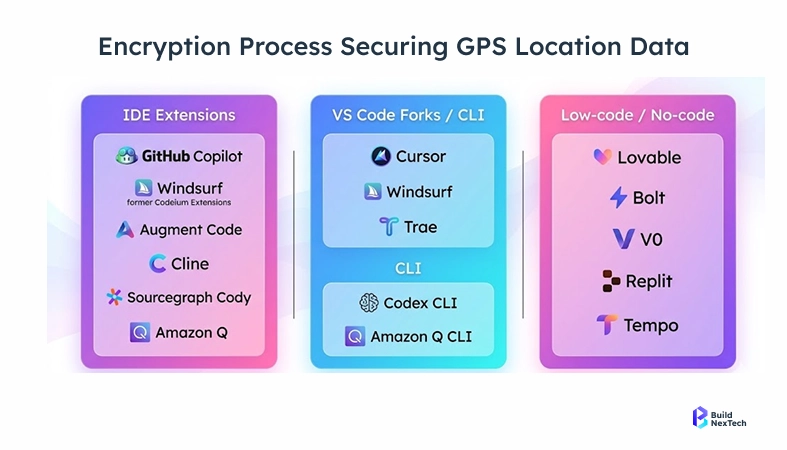
The tools that fall under AI coding include Copilot-style autocomplete, AI-generated refactoring suggestions, automated test scaffolding, and documentation synthesis from existing codebases. None of those require a vibe coding workflow. A developer can use all of them while still writing and owning every significant architectural decision manually.
The AI Coding Advantages and Disadvantages Most Teams Are Honest About
The advantages are real and well documented. Boilerplate generation, config files, CRUD operations, test scaffolding, and documentation stubs save hours each week. It catches common bugs before human review. It helps a Python developer ship something functional in Go without a multiweek rampup.
The disadvantages get less coverage. AI tools produce confident-looking output that is sometimes wrong. They generate plausible code that does not work, alongside plausible explanations for why it does. Security vulnerabilities slip through AI-generated code and introduce issues that junior developers miss on a cursory review.
A 2024 study by Uplevel, an engineering analytics platform, found no statistically significant difference in pull request throughput between teams using GitHub Copilot and those without it. That is not proof the tools are useless. It is proof that adoption alone does not produce the productivity gains that marketing suggests.
The longer-term risk is skill atrophy. Engineers who outsource debugging to AI tools lose fluency in the exact work that matters most when those tools produce wrong results.
LowCode vs Traditional Development: When the Comparison Is Useful and When It Isn't
Low-code platforms: OutSystems, Mendix, Microsoft Power Apps
Let development teams build applications through visual interfaces with minimal hand coding. For the right scope, they move fast. A workflow automation that would have taken four weeks in traditional development can ship in a few days.
Where the truth gets distorted is when "lowcode" gets pitched as a replacement for traditional development at scale. It is not. The limitations become apparent when the requirements become complex. You end up injecting custom code to make the visual components work, then maintaining a hybrid system that is harder to debug than a codebase you owned from the beginning.
The enterprises that use low code well are the ones who scoped it deliberately: approval workflows, internal portals, form-heavy data collection, and HR automation. Things with bounded complexity and low consequence if something breaks. Any application that requires serious transaction volume or must comply with regulations remains in traditional environments.
NoCode vs Traditional Coding - The Gap Is Smaller Than It Was but Still Matters Where It Counts
Nocode tools have become genuinely capable. Webflow handles things in 2026 that would have needed a frontend engineer in 2021. Zapier manages workflow complexity that previously required custom middleware. Bubble can ship functional web applications without a line of code written by hand.
The distinction is no longer about raw capability. It is about who owns the build after launch and what happens when something breaks at the infrastructure level. A marketing ops person building a Webflow landing page is in familiar territory.
That same person trying to connect a proprietary internal API through Bubble will hit a hard boundary.
No code works when the builder understands the domain, the data flows are clean, and failure is recoverable. When any of those conditions change, the platform's constraints become the problem, not the feature. The mistake is not using no-code; it is using it outside the conditions it was designed for.
How to Choose the Right Development Approach: A Practical Framework
There Is No Universal Right Answer. There Are Better and Worse Questions.
Before choosing a methodology, ask one question: who maintains the code in 18 months, and what do they need to understand to fix it at 2am? The answer changes the calculus faster than any framework.
A vibe-coded internal dashboard maintained by the person who built it is manageable. A vibecoded payment service maintained by whoever joined the team after the original engineer left is a liability waiting to surface.
The second filter is risk. Customer-facing systems under load need traditional discipline with AI assistance on the margins. Internal tools below the compliance line are vibe coding's natural home. New product prototypes get built fast and thrown away or rebuilt properly. Marketing surfaces go to no code and stay there.
BNXT, an enterprise development consultancy, works with engineering teams that have inherited all of these in a single codebase: legacy Java services, low-code workflows added to solve a problem three years ago, and a new AI-assisted layer the current team is building on top of.
The question is not which one to keep. It is about which one serves each build type and where the handoffs between them need to be clean enough to avoid problems downstream.
Enterprise Software Development Trends in 2026: What's Actually Shifted
AI coding stopped being an experiment twelve months ago. The teams not using it are starting to feel the gap, not because the tools are magic but because their competitors are shipping faster on routine work and redirecting that time to harder problems. In many teams, this gap continues to widen as competitors improve development velocity
Vibe coding found a real place in product development. It is not the future of all software.
It is a fast lane for low risk builds, and the teams treating it that way are getting genuine value. The teams treating it as a replacement for engineering discipline are creating problems they will spend 2027 resolving.
Low-code vendors are moving upmarket aggressively. Mendix and OutSystems have both publicly announced enterprise ERP replacement positioning in 2025, competing directly with SAP and Oracle implementations. Some of those bets will pay off for specific customers. Edge cases, and there are always edge cases in enterprise systems, will be expensive.
The part that does not get enough coverage: testing is now the bottleneck. AI coding and vibe coding make writing code faster. They have not made verifying codes faster. QA, automated testing, and observability are the parts of engineering that catch the problems.
AI code generation has accelerated writing. It has not accelerated verification - QA and testing remain the bottleneck. That gap is where the return on fast development actually leaks out. For BNXT clients, this comes up in nearly every engagement: building faster only pays off if you are confident that what you shipped works.
Final Thoughts
The vibe coding vs traditional development debate shows up more in thought leadership than in day-to-day engineering decisions, where teams already use multiple approaches in parallel. Real teams are already using multiple approaches at once and arguing about the margins.
What separates the teams shipping well from the ones shipping fast and paying for it later usually comes down to one thing: they made a deliberate choice about which approach fits which build type, rather than letting the choice get made by whoever was most enthusiastic about the latest tool.
BNXT, an enterprise development consultancy, works with enterprise development teams that are exactly on this: focusing on auditing existing systems and aligning them with current roadmap needs rather than enforcing a single methodology. What is in the codebase, aligning it with what is on the roadmap, and identifying where each approach adds the most value. If you're evaluating how to structure your development approach, this is a conversation worth having - explore it further on our contact page. You can explore this further on our contact page.
People Also Ask

What is vibe coding, and how is it different from traditional development?
Vibe coding is a prompt-driven approach where you describe what you want and an AI generates the implementation. Traditional development means a developer writes, owns, and reviews every line manually.
Can vibe coding be used in enterprise production systems?
Yes, but only for low-stakes builds like internal tools and prototypes. Customer-facing systems, regulated features, and anything under real load still require traditional discipline and human review.
Is low-code suitable for serious enterprise applications?
Lowcode works well for workflow automation, internal portals, and approval processes with bounded scope. Once requirements grow complex or touch compliance boundaries, it creates more problems than it solves.
What is the biggest risk of using AI-generated code in production?
AI hallucination is a code that compiles and looks correct but fails under edge cases the model has never encountered. Security vulnerabilities around input validation and authentication are the second most common issue.
How should enterprise teams decide which development approach to use?
Enterprise teams should choose a development approach based on long-term maintainability, not short-term speed or convenience. If a system breaks at 2am in 18 months, the right approach is the one your team can quickly understand, debug, and fix with confidence


.webp)
.webp)
.webp)

.webp)
.webp)