


Let me be direct with you: most organisations I have worked with or spoken to are sitting on a goldmine of data and doing almost nothing actionable with it - at least not in real time. They collect, store, and batch-process information, then make decisions hours or even days after the moment has passed. In a world where markets shift in milliseconds, customers churn in minutes, and supply chains collapse overnight, that lag is no longer a competitive disadvantage. It is a structural one.
Hyperautomation is not just another buzzword cycling through LinkedIn feeds and conference keynotes. It is a fundamental architectural shift in how organisations make decisions. It weaves together RPA (Robotic Process Automation), AI, machine learning, workflow automation tools, data integration tools, and real-time analytics into one cohesive, always-on decision engine.
I have seen firsthand how a well-implemented hyperautomation stack can reduce decision latency from 72 hours to under 90 seconds. This guide is my attempt to show you exactly how that happens - step by step, system by system, decision by decision.
What Poor Real-Time Decisions Are Costing Your Business
Hidden Impact of Delayed Data on Revenue, Risk, and Customer Experience
Most business leaders I talk to understand that slow decisions are costly. But few have actually quantified what delayed data is costing them per quarter. Let me put some weight behind it: according to a Forrester study, businesses that act on real-time data see 2.5x higher revenue growth compared to those relying on delayed batch reporting. That is not a marginal edge - that is a structural advantage.
Here is what poor real-time decision-making actually looks like in practice across three critical dimensions:
The irony is that most organisations already have the data they need. It is sitting in their CRM, ERP, event logs, and customer touchpoints. The problem is not data collection methods - it is the inability to act on it the moment it becomes meaningful. Hyperautomation fixes exactly that.
Hyperautomation in Action: Beyond Basic Automation
How RPA, AI, and Analytics Work Together for Intelligent Decisions
If you are still thinking about hyperautomation as "just RPA with a fancy label," I want to challenge that framing immediately. Basic automation handles repetitive, rules-based tasks. Hyperautomation, as defined by Gartner, is a disciplined, business-driven approach that organisations use to rapidly identify, vet, and automate as many business and IT processes as possible - including ones that require contextual intelligence.
The architecture behind a real hyperautomation platform looks something like this:
Notice how playwright MCP server fits in at the data capture layer? It enables automated browser interaction for web scraping, testing, and monitoring - feeding real-time signals into your automation pipeline. Similarly, supabase MCP acts as a real-time database backbone, syncing data instantly across microservices. And slack MCP enables push-based decision notifications directly into team workflows.
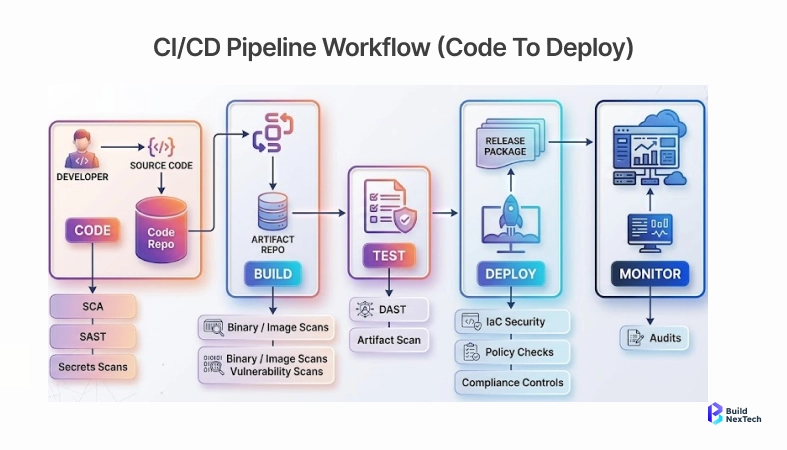
Together, these tools do not just automate tasks - they create a self-reinforcing loop where data triggers decisions, decisions trigger actions, and actions generate new data. That is the essence of hyperautomation.
How Real-Time Data Translates into Immediate Business Actions
Converting Continuous Data Streams into Decision Triggers
One of the most common questions I get is: "How do you actually turn a data stream into a business action?" It sounds conceptually clean but feels technically murky. Let me walk you through a concrete example using an e-commerce order fulfillment scenario.
The pattern is called an event-driven decision trigger. Here is what it looks like in code using an n8n workflow automation setup:
// n8n Workflow: Real-Time Inventory Decision Trigger
// Trigger: Webhook from inventory management system
{
  "trigger": "inventory.threshold_breach",
  "sku": "PROD-8821",
  "current_stock": 12,
  "reorder_point": 50,
  "demand_velocity": 18.4  // units/day from ML model
}

// n8n Decision Node (AI workflow)
if (current_stock / demand_velocity < 3) {
  // Days of stock < 3 -> trigger urgent PO
  notifySupplierViaAPI({ priority: "urgent", qty: calculateReorderQty() });
  updateERPStatus({ sku, status: "PO_PENDING" });
  sendSlackAlert({ channel: "#ops", message: "Auto-PO raised for PROD-8821" });
}
That single workflow replaces what used to be a 3-step manual process: someone checks inventory reports, escalates to procurement, and emails the supplier. In a hyperautomated environment, the entire chain completes in under 4 seconds - with full audit trail.
The key building blocks for this kind of ai workflow are:
- A reliable event stream (Kafka, webhooks, CDC pipelines)
- A decision engine that can evaluate conditions with ML model outputs
- Execution connectors for CRM integration, ERP, and communication tools
- A governance layer that logs every automated decision for compliance
Simplifying Data Integration with Hyperautomation
Breaking Silos: Connecting Systems, Workflows, and Data in Real Time
Here is the uncomfortable truth about enterprise data: most organisations have between 40 and 900 different applications in their tech stack - and less than 30% of those are meaningfully integrated with each other. That is not a technology problem. That is a data integration strategy problem.
Hyperautomation solves this by treating integration as a first-class citizen of the automation stack, not an afterthought. Whether you need crm integration to unify customer signals, api integration to connect third-party services, or vertical integration of your internal value chain - the approach is the same: build integration pipelines that are event-driven, schema-aware, and resilient.
In a bnxt.ai engagement with a mid-market logistics company, connecting their WMS, TMS, and customer portal via API gateway reduced dispatch decision time from 4 hours to 12 minutes - in under 3 weeks. No headcount added.
The key lesson: integration is not a project you finish. It is a capability you build and scale continuously.
AI-Powered Decision Intelligence in Hyperautomation
Moving from Predictive Insights to Automated Decision Execution
This is where things get genuinely exciting and where I see most organisations leaving significant value on the table. There is a massive difference between a system that predicts something ("Customer X has a 73% churn probability") and one that acts on that prediction automatically ("Customer X just received a retention offer and a 15% discount coupon automatically").
AI-powered decision intelligence bridges that gap. Here is the technology stack that makes it real:
A quick but important distinction: when people debate LLM vs AI or generative AI vs LLM, they are usually conflating two different things. LLMs are a specific type of AI optimized for language tasks. Generative AI is broader it includes image, code, and audio generation. For hyperautomation, you typically need both: LLMs for reasoning and communication tasks, and narrower ML models for prediction and scoring.
The real magic happens when you chain them together inside a workflow automation layer. An anomaly detection model flags an unusual transaction. An LLM RAG system queries your fraud policy database for context. A decision rule engine applies the verdict. An RPA bot freezes the account. A notification fires via Slack. All in under 2 seconds. No human in the loop unless the confidence score drops below threshold.
Real-World Use Cases Driving Business Impact
How Finance, Healthcare, Retail, and IT Use Hyperautomation for Faster Decisions
Let me walk you through how different industries are applying hyperautomation - not hypothetically, but with specific patterns from bnxt.ai engagements.
Finance: Real-Time Fraud Detection & AML Compliance
In a bnxt.ai engagement with a regional bank, fraud alerts that were previously taking 45 minutes to process - with human analysts manually reviewing every flagged transaction - were transformed using an AI automation services stack combining ML scoring, an api gateway for real-time feeds, and an n8n workflow automation layer. Review time dropped to 8 seconds for 94% of alerts. The remaining 6% (high-ambiguity cases) still go to human review, but analysts now spend their time on genuinely complex cases.
Healthcare: Clinical Decision Support & Claims Processing
In a bnxt.ai engagement with a healthcare network, LLM RAG was used to give clinical staff real-time access to treatment protocols during patient intake. Combined with a data annotation pipeline that continuously updated the knowledge base from new clinical guidelines, response accuracy improved by 38% compared to static reference lookup. Claims automation using SOAP API integration with insurance systems reduced the claims-to-payment cycle from 21 days to 4.
Retail: Dynamic Pricing & Demand Forecasting
In a bnxt.ai engagement with an online retailer, the pricing engine was connected to real-time competitor data via playwright mcp (automated browser scraping), inventory signals from their WMS, and demand velocity from their analytics platform. An ai workflow evaluating all three signals every 15 minutes drove dynamic pricing that increased margin by 11% in the first quarter - without a single manual pricing decision.
IT Operations: Incident Response & Auto-Remediation
In a bnxt.ai engagement with a SaaS company, their observability stack (Datadog alerts) was integrated with an ai workflow automation engine that classified incidents, queried a runbook knowledge base via LLM RAG, and executed remediation scripts automatically. Mean time to resolution (MTTR) dropped from 43 minutes to 6 minutes. On-call engineer interventions fell by 61%.
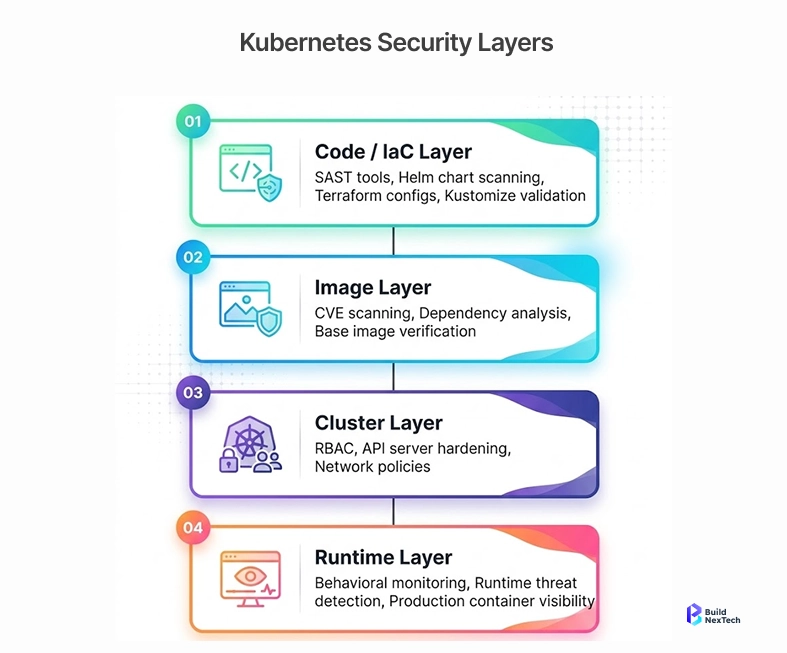
At bnxt.ai, our assessment framework maps your current automation maturity against industry benchmarks - identifying the highest-ROI starting points before you commit resources. If you are evaluating where to begin, reach out to us directly and we will walk you through it.
Step-by-Step Roadmap to Implement Hyperautomation
From Data Readiness to Scaled Decision Automation
Here is the honest version of the implementation roadmap - not the sanitized consulting deck version, but what actually works in practice:
- Audit your data readiness. Before anything else, run a data quality assessment across your core systems. Ask: Is our data complete? Is it timely? Is it consistent across systems? Without this foundation, even the best ai integration strategy will produce garbage-in-garbage-out automation.
- Map decision flows, not just processes. Identify where humans currently make repeatable decisions using data - approval workflows, prioritization queues, routing logic. These are your highest-value automation candidates.
- Select your integration backbone. Choose a platform for data integration (Kafka, MuleSoft, or lightweight tools like n8n workflow) and establish your api management standards - versioning, authentication, rate limiting, and api testing protocols.
- Deploy AI where judgment is needed. Integrate LLMs or ML models into decision nodes where simple rules are insufficient. Set confidence thresholds for human escalation.
- Build governance from day one. Define your data management policies, api security standards, audit requirements, and model monitoring procedures before you scale - not after.
- Run parallel operations first. Before full automation, run your system in shadow mode alongside manual processes. Validate decision accuracy over 2–4 weeks before cutting over.
- Scale incrementally with workflow automation tools. Add new process domains one at a time. Use workflow management software to maintain visibility across all automated decision paths.
Key Benefits: Why Businesses Are Investing in Hyperautomation
Speed, Accuracy, Scalability, and Competitive Advantage
The case for investment becomes clear when you look at it through four lenses:
Speed
Real-time analytics company platforms that power hyperautomation reduce decision latency from days to seconds. When you can act on a customer signal, market movement, or operational anomaly in near real time, you are playing an entirely different game from your competitors.
Accuracy
Human decision-making under cognitive load and time pressure is error-prone. AI-driven decision engines operating on clean, integrated data consistently outperform manual processes especially for high-frequency, low-to-medium complexity decisions. According to McKinsey's State of AI report, organisations with mature AI automation services capabilities report 20–40% improvement in decision accuracy for operational use cases.
Scalability
Manual processes scale linearly with headcount. Automated decision systems scale horizontally a hyperautomation company can process 10x transaction volume without proportional cost increase. This is the economic flywheel that makes hyperautomation agency investments self-compounding over time.
Competitive Advantage
When your organisation can identify a churn signal and act on it before a competitor even notices it, when your supply chain auto-adjusts to a supplier disruption while your competitors are still scheduling a meeting to discuss it that is not just efficiency. That is structural market advantage.
Challenges You Must Solve Before Scaling Hyperautomation
Data Quality, Integration Complexity, and Governance Risks
I want to be honest here because most content on hyperautomation glosses over this section. The reality is that scaling hyperautomation without solving these foundational problems will amplify your existing issues faster than it creates value.
Challenge 1: Data Quality
Garbage in, garbage out is not a cliche it is the primary failure mode of enterprise automation programs. Before deploying AI integration or automated decision pipelines, invest in data annotation quality processes, schema validation at ingestion points, and data lineage tracking. Your data engineer teams need to own this as a continuous operational responsibility, not a one-time cleanup project.
Challenge 2: Integration Complexity
Connecting 20+ systems with different data formats, api design patterns (REST vs SOAP API vs GraphQL), authentication mechanisms, and rate limits is genuinely hard. Without a coherent api management strategy including versioning, monitoring, and api testing frameworks integrations become brittle and hard to maintain at scale.
Challenge 3: Governance and Compliance Risk
Automated decisions without governance frameworks are a regulatory liability. You need clear policies on: which decisions can be fully automated, what confidence thresholds trigger human review, how to handle edge cases, and how decision audit trails are stored and accessed. This is especially critical in regulated industries (finance, healthcare) where automated decisions have direct legal implications.
Best Practices to Maximize Decision Intelligence
Governance Frameworks, Tooling Strategy, and Continuous Optimization
After running multiple hyperautomation implementations, here are the practices that consistently separate successful programs from expensive failures:
- Treat your automation layer as a product, not a project. Assign product ownership, maintain a backlog, and iterate continuously.
- Build a Center of Excellence (CoE) early. Centralise expertise in workflow automation tools, ai workflow automation patterns, and api management. Federate execution.
- Instrument everything. Every automated decision should log its inputs, the model/rule that fired, the output, and the downstream action. Data visualization dashboards should surface this in real time.
- Implement human-in-the-loop escalation intelligently. Do not try to automate 100% of decisions from day one. Define confidence thresholds and route low-confidence decisions to human review queues.
- Run regular decision audits. Monthly review of automated decisions against actual outcomes helps catch model drift, edge cases, and emerging patterns your rules did not anticipate.
- Standardize your api design patterns. Consistent REST API design, documentation, and versioning across your integration layer drastically reduces maintenance overhead.
- Invest in data visualization and observability. Real-time dashboards using data visualization tools (Grafana, Superset, or embedded analytics) give operations teams the visibility they need to trust - and appropriately override - automated systems.
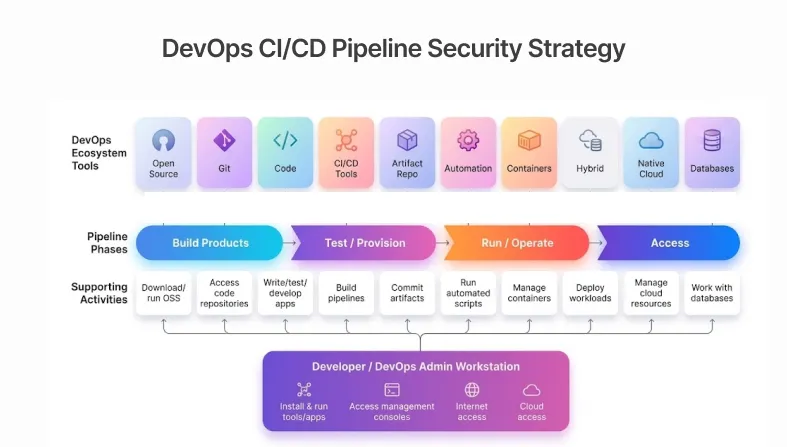
One specific tool combination that has worked exceptionally well: n8n workflow automation for the orchestration layer (open-source, highly extensible, integrates with virtually everything), supabase mcp for real-time data sync, and a hosted LLM RAG system for contextual decision enrichment. The cost-to-capability ratio is outstanding for mid-market implementations.
The Next Phase: Autonomous Decision-Making Systems
How AI Evolution Will Reduce Human Dependency in Decisions
We are standing at an inflection point. The current generation of hyperautomation is human-supervised: automation executes, humans review exceptions. The next generation - already emerging in research and early enterprise deployments - is moving toward genuinely autonomous decision-making for a broader class of problems.
What drives this shift? Several converging forces:
- LLM reasoning capabilities are improving rapidly, enabling AI systems to handle ambiguous, multi-factor decisions that previously required human judgment
- Agentic AI architectures (like those using playwright mcp for browser-based action-taking) allow AI systems to gather their own context, execute multi-step plans, and adapt to unexpected states
- Improved model interpretability means decision-makers can increasingly audit why an AI made a specific choice - which is the prerequisite for trusting full automation
- Feedback loop infrastructure is maturing, allowing models to learn from outcomes in real time and self-correct without periodic manual retraining
The practical implication: within the next 3–5 years, organisations that have built solid hyperautomation foundations today will be positioned to deploy genuinely autonomous decision systems in specific domains - customer success, supply chain optimization, IT operations, and financial risk management. Those that have not built the foundation will be playing catch-up in a race that does not slow down.
Conclusion: Turning Real-Time Data into a Competitive Decision Engine
Here is what I want you to take away from this guide: hyperautomation is not about replacing people - it is about amplifying the quality and speed of decisions your organisation makes at every level. It is about ensuring that when a critical signal appears in your data - a fraud pattern, a supply shortfall, a churn risk, an infrastructure anomaly - your systems respond intelligently before that signal turns into a costly problem.
The technology is ready. Mature platforms exist across every layer of the stack - from workflow automation tools like n8n, to enterprise-grade api gateway solutions, to LLM-powered decision intelligence. Real-time analytics company offerings have never been more accessible or cost-effective.
What separates organisations that win with hyperautomation from those that struggle is not the technology budget - it is the strategic clarity to start with high-value decision flows, the discipline to build data quality and governance foundations before optimizing for speed, and the organisational will to trust and continuously validate the automated decisions their systems make.At bnxt.ai, we build exactly this kind of decision infrastructure - from today's supervised automation through to the autonomous systems that will define the next decade. The governance and observability layers are built in from the start, not bolted on later. See how we approach it.
People Also Ask

Q1. How does hyperautomation integrate with legacy systems without disrupting existing workflows?
Hyperautomation integrates with legacy systems through API layers and middleware connectors that sit on top of existing infrastructure without replacing it. RPA bots handle older interfaces while API gateways manage data translation, keeping current workflows intact.
Q2. What are the key challenges organisations face when scaling hyperautomation initiatives?
The biggest obstacles are poor data quality, integration complexity across siloed systems, and weak governance frameworks. Most programs fail not because of bad technology but because they scale before the data foundation is solid.
Q3. How can businesses measure the ROI of hyperautomation in decision-making processes?
Track decision latency, error rates, cost per transaction, and straight-through processing rates before and after implementation. Multiply time saved per decision by total decision volume - most organisations hit payback within 6–12 months.
Q4. What role does governance play in managing hyperautomation-driven decisions?
Governance defines which decisions can be fully automated, sets confidence thresholds for human escalation, and ensures every automated decision is logged for audit and compliance. Without it, automation scales risk just as fast as it scales efficiency.
Q5. How can small and mid-sized businesses adopt hyperautomation with limited resources?
Start with one high-frequency, high-value decision flow using low-cost tools like n8n and Supabase. You do not need an enterprise budget - a focused use case, clean data, and a phased rollout plan are enough to get started.


.webp)
.webp)
.webp)

.webp)
.webp)