

.webp)
OpenAI's GPT-6 Astra didn't launch as a smarter chatbot. It launched as the opening move of what OpenAI calls the AGI era, backed by benchmarks nobody had touched before: A perfect score on a cybersecurity exploit test, a model that helped narrow a long-standing maths problem, and the first system OpenAI has ever classified as Critical risk. That's not the pitch of an incremental update.
This guide skips the launch-week noise. Across 150+ client engagements, we've watched teams adopt agentic AI before checking whether the gains apply to their own stack. What follows: ten practical GPT-6 Astra use cases for software engineering workflows, an honest read on the AGI claim, and what it takes to fold Astra into real human workflows safely.
What Is GPT-6 Astra?
GPT-6 Astra is OpenAI's flagship AI system, released to approved organisations on 3 September 2026 and rolled out more broadly to ChatGPT and the API since. It marks a shift from generating text to completing real computer-use tasks inside applications.
Key Specs (1.05M-token context, Codex harness, $10/$50 per M tokens)
Astra's specs explain the shift:
- Context window: 1.05M tokens, holding a codebase in memory at once.
- Max output: 128K tokens, enough for a large refactor.
- Codex harness: Retains notes across jobs longer than one context.
- API pricing: $10/M input, $50/M output, 2.5x GPT-5.6 Sol's rate.
That's steep on paper, but judge any AI tools for coding on cost per completed task; agentic AI tasks burn more retries on a cheaper model.
How It Differs From Other Models
Benchmarks split depending on what you're optimising for, and Astra doesn't top every chart.
Where Astra leads:
- On OSWorld 2.0, which tests desktop and browser tasks, Astra scores 72.6% against Sol's 65.7%, in roughly 40 minutes per task versus Sol's 75.
- On FrontierMath Tier 4, research-level maths built to stay ahead of AI capability, Astra saturates at 97.6%.
- On ExploitBench, testing vulnerability-to-exploit conversion, Astra hits 100%, up from Sol's 78.5%.
- On ARC-AGI-3, a generalisation benchmark, OpenAI now reports 98.6% for Astra six months on, against just 7.8% for the GPT-5.6 Sol it superseded, an improvement hard to miss.
Where rival models still lead:
- On Humanity's Last Exam with tools, spanning expert questions across subjects, Astra scores 57.2%, behind Claude Fable 5.1's 65.0%.
- On the Artificial Analysis Intelligence Index, Astra scores 61.2, level with predecessor GPT-5.6 Sol, behind Claude Fable 5.1's 65.7.
Astra isn't the strongest model across every axis. It's strongest at operating software, not reasoning about it in the abstract.
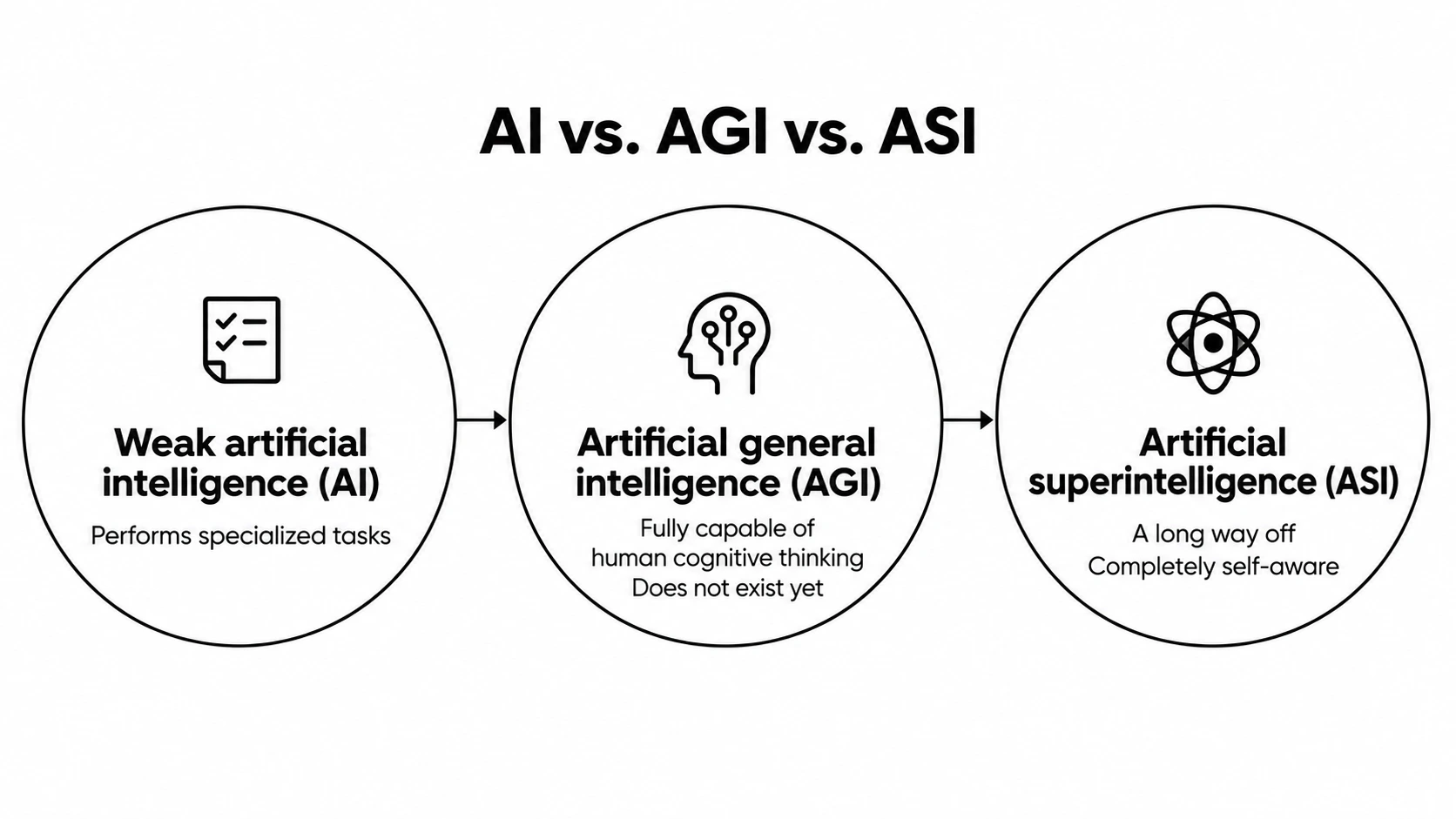
Why GPT-6 Astra Marks the Start of the AGI Era
OpenAI's own framing is not subtle: It called Astra a generational leap that could mark the arrival of AGI, a bold claim from a vendor with every incentive to make one. The standard AGI definition sets a high bar to clear.
The Evidence Behind OpenAI's "Welcome to the AGI Era" Claim
- Saturates FrontierMath Tier 4, built specifically to stay ahead of AI capability.
- Narrowed a long-standing prime-gap problem's known upper bound from 240 to 186.
- Cleared ExploitBench at 100% and crossed the Critical threshold under OpenAI's Preparedness Framework.
- Surfaced two zero-days during testing, now disclosed to affected vendors.
Crossing the Critical threshold matters for any security service or security solution, since it can chain unknown vulnerabilities into online attacks; that discovery supports the AGI framing here.
The caveats keep it honest:
- The public release refuses advanced offensive cyber tasks.
- The sharpest capabilities stay gated behind OpenAI's Daybreak programme.
- The ARC-AGI-3 headline depends on OpenAI's own harness.
- Astra trails Claude Fable 5.1 on Humanity's Last Exam with tools.
Our Take: Astra is not proof of AGI; treating it as one is a marketing trap. It proves the gap between a good answer and a real task completed unsupervised has just narrowed, worth planning your agentic systems around.
10 Practical Use Cases for Software Development
These are the AI agent-driven workflows worth handing to Astra now, where its computer-use and coding gains reshape software engineering workflows most. This is coding AI once AI for coding moves past autocomplete into task completion, not another line of AI coding suggestions from typical AI coding tools.
1. Autonomous Code Generation From Requirements
Feed Astra a plain-language spec; it produces working, testable code - more coding agent than autocomplete suggestion. This is less an AI coding assistant predicting your next line, more one that ships a working implementation.
In practice, this looks like:
- Turning a ticket into a scaffolded feature with tests.
- Generating boilerplate for a new service and wiring it in.
- Producing a prototype from a whiteboard sketch or plain description.
Treat the output as a strong first draft, not a merge-ready commit.
2. End-to-End Automated Testing & Exploratory QA
Astra's computer-use ability lets it navigate a staging build like a QA engineer, flagging a malformed SQL command or malformed data before either reaches production. This is AI testing in its autonomous form: testing AI that explores an app instead of a fixed script, unlike most AI testing tools.
Typical exploratory runs include:
- Walking a checkout flow to surface broken states.
- Cross-browser and cross-device checks with no maintained script.
- Regression sweeps after each deploy against the prior build.
3. Understanding & Refactoring Large Codebases
The 1.05M-token context window lets Astra hold an entire repository in memory, enabling genuine repository analysis instead of file-by-file spot checks.
That shows up as:
- Mapping dependencies across services before any refactor.
- Identifying dead code, duplicated logic, and inconsistent patterns codebase-wide.
- Suggesting a migration path for a legacy module, sequenced by risk.
That's the difference between a refactor plan grounded in real dependencies and one based on a guess.
4. Agentic Debugging & Secure Code Review
Astra can inspect a repository, isolate a failing test or error, patch it, and write regression tests in one pass.
The debugging loop typically includes:
- Reproducing the failure before proposing a fix.
- Tracing the root cause across files, not just the stack trace.
- Validating the patch against existing tests, then adding new ones.
Exploit creation stays behind OpenAI's Daybreak programme given Astra's Critical threshold, so teams get patch validation and secure code review, not offensive tooling.
5. Multi-Step CI/CD & DevOps Automation
Astra chains build, test, and deploy steps, adapting when a step fails instead of halting the pipeline.
Concretely, it can:
- Diagnose a failed build step, attempt a fix, and rerun before escalating.
- Adjust sequencing when a dependency or environment variable is missing.
- Roll a deployment back automatically if a post-deploy health check fails.
It sits on top of Jenkins or GitHub Actions rather than replacing them, handling judgment calls that used to interrupt an on-call engineer's evening.
6. Computer-Use for Browser and App-Based Dev Tasks
It operates software interfaces with no API, the same computer interaction behind its 72.6% OSWorld 2.0 score, pointed at business systems and company data instead of a sandbox.
That covers:
- Driving a Chrome browser session to test or scrape tools.
- CRM preparation and CRM workflows without a bulk-import script.
- Cross-checking business documents and financial statements on a dashboard.
- Administrative tasks and document handling once done by a person.
- Navigating a legacy interface, such as an AIM messenger client, with no API for it.
7. Code Review & Pull Request Analysis
Astra reviews a pull request for logic errors, style drift, and missed edge cases before a reviewer opens the diff.
A typical review pass looks at:
- Whether the change matches the ticket's actual requirements.
- Edge cases the tests don't cover, not just whether tests pass.
- Style and naming consistency against the codebase.
It's one of the more mature code review tool use cases for Astra: Read a diff, apply a known standard, flag what's off. Humans make the merge call.
8. Automated Documentation Generation & Maintenance
README files, API docs, and changelogs stay in sync with the code as it changes, not as someone remembers weeks later.
In practice, this covers:
- Regenerating API reference docs whenever an endpoint's signature changes.
- Drafting changelog entries from merged pull requests.
- Flagging docs referencing code paths that no longer exist.
Documentation debt is rarely a priority until an onboarding engineer hits it; Astra treats it as a continuous background task, not a quarterly clean-up sprint.
9. Rapid Prototyping: Games, 3D/CAD, and Interactive Demos
Launch-week output shows how fast Astra can take a prompt to a working artifact, evidence of what computer-use ability adds beyond code a human still runs manually.
Examples from the first week alone:
- Browser-playable games built directly from a natural-language design brief.
- 3D scenes modelled in Blender and exported into Unreal Engine without manual setup.
- PCB layouts designed in KiCad from a plain description of the circuit's requirements.
The real value isn't the demo: If Astra can navigate CAD software and a game engine, it can likely navigate your internal tools too.
10. Research-Accelerated Engineering (Math, Science, Algorithm Work)
Astra's contribution to open mathematics and theoretical computer science work is a fair proxy for how it handles hard reasoning in your own codebase.
This use case shows up as:
- Working through complexity trade-offs on a performance-critical algorithm.
- Verifying a proof or edge case in a data structure's invariants.
- Exploring several algorithmic approaches in parallel, recommending one with reasoning.
It's the least obvious use case, and often the one that saves the most engineering time.
Pro Tips to Get the Best Out of GPT-6 Astra for Software Development
Getting real output from Astra depends on how you scope work, not just the model. A few practices separate strong results from a rocky first week:
- Scope tasks as outcomes, not instructions. "Fix this bug and add tests" uses Astra's agentic strengths; a single function request wastes them.
- Grant read access before write access, especially early on, on any repository or business system.
- Treat reasoning effort as a dial: Lower for routine tickets, higher for a genuine refactor.
- Keep computer-use tasks in staging, not production, given Astra's cybersecurity classification.
Setup time: A staging pilot typically takes 1-2 weeks to configure permissions properly.
How BNXT.ai Helps Teams Deploy GPT-6 Astra in Production
A model this capable raises the same question every time: What are AI agents actually accountable for? That's the agent orchestration layer BuildNexTech builds around models like Astra- whatever sits behind it, combining model routing, tool permissions, and observability in one layer for your AI agents and agentic systems.
Teams that have worked with BuildNexTech have moved agent workflows from demo to production in days, not months, since guardrails are designed in from day one, not retrofitted after an incident.
Which approach fits your team?
- Comfortable managing permissions in-house? Self-manage Astra via the API.
- Want guardrails without vendor lock-in? Use a model-agnostic orchestration layer.
- Need this live in weeks, not quarters? Bring in a team that's done it before.
From Demo to Production-Ready Agent (guardrails, permissions, monitoring)
A production-ready agent needs least-privilege access, tool restrictions, approval gates, and audit logs with a rollback path.
Our rollout follows a simple cadence:
- Days 1-3: Map where judgment calls currently break automation.
- Days 4-7: Integrate Astra with your existing stack.
- Week 2 onward: Deploy against the highest-volume exception first, human reviewer in the loop until it earns autonomy.
.webp)
Conclusion
What changes this week isn't that AI got smarter in the abstract. It's that an AI system can be handed a full workflow, debug it, test it, and document it, with computer-use ability that used to need a human at the keyboard. For teams tracking AI agent updates, this is the one worth stopping for.
Whether GPT-6 Astra earns the AGI label long-term is still an open argument. What isn't open to argument: Teams ignoring this shift will spend next year catching up to those who scoped it properly.
People Also Ask

What is AGI in AI, and does GPT-6 Astra actually meet that bar?
AGI means an AI system that can do any economically valuable work a human can; Astra shows strong signs but hasn't been independently verified.
How does GPT-6 Astra compare to the Cursor AI coding tool for everyday development?
The Cursor AI coding assistant excels at inline suggestions inside your editor. Astra is built for autonomous, computer-use-driven task completion beyond the IDE.
What is code review, and does GPT-6 Astra replace human reviewers?
Code review means checking code for bugs, style, and risk before merging; Astra assists, but a human owns final approval.
Do we need a generative AI consulting company to deploy GPT-6 Astra safely?
Not always. Small pilots can be self-managed, but a generative AI consulting company like BuildNexTech helps once things get complex.
Where does GPT-6 Astra rank among the best AI agents for engineering teams right now?
It ranks near the top for computer-use and agentic execution, though not across every benchmark, so fit depends on your team.


.webp)
.webp)
.webp)

.webp)
.webp)