

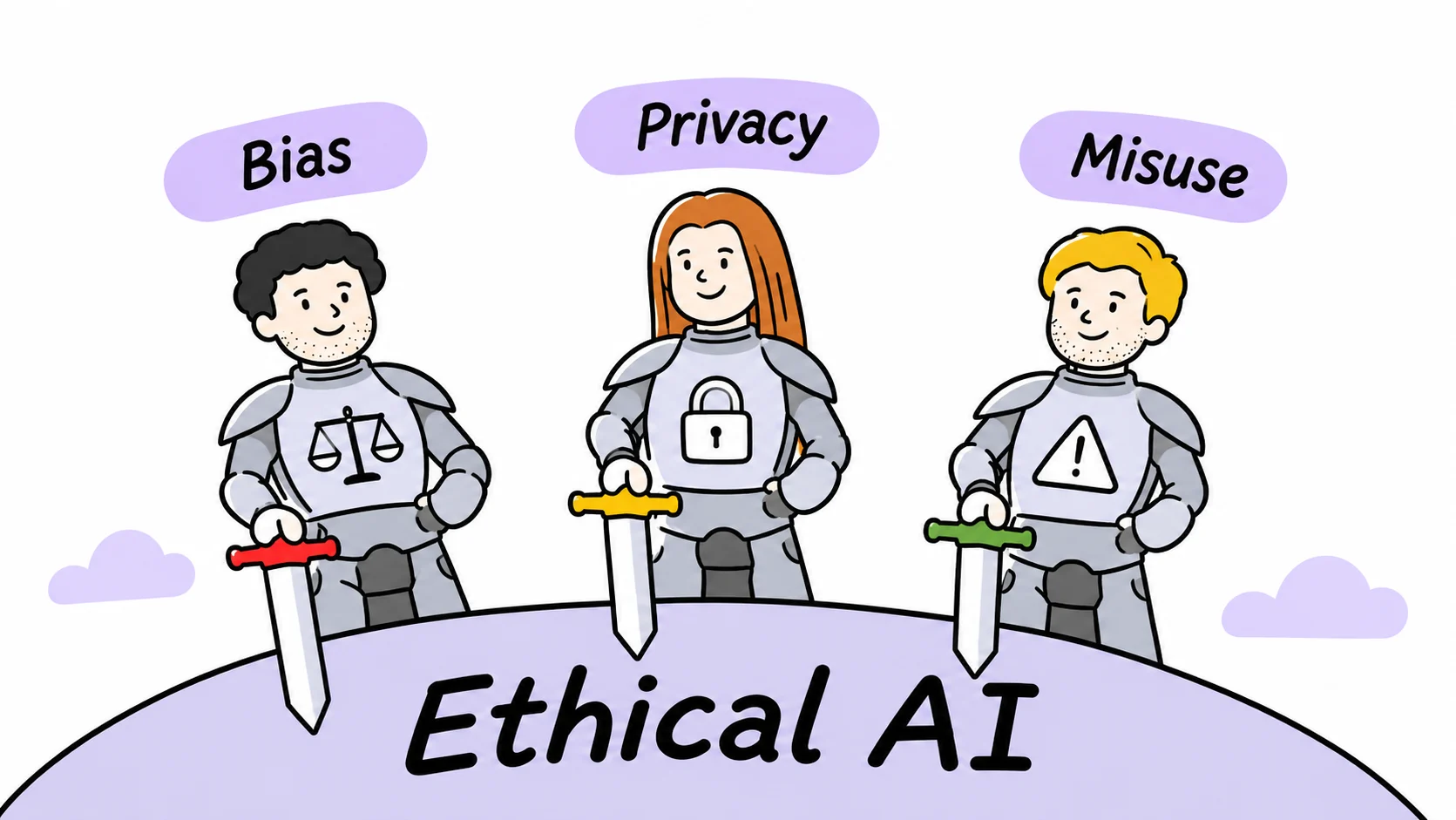
As AI adoption spreads, every organisation running AI hears the same board question: Who is accountable when an AI system gets a decision wrong? Too often legal points at engineering, engineering points at product, and nobody can produce a list of the models in production, let alone who approved them.
In 2024, a Canadian tribunal held Air Canada responsible for wrong refund advice from its website chatbot. In 2023, the US EEOC settled with iTutorGroup for $365,000 after its recruiting software automatically rejected older applicants. Both are reminders that someone has to own what an AI system does.
Ethical AI vs. Responsible AI: A Definition for Leaders
Ethical AI is the practice of building and running AI systems that are fair, transparent, accountable, and respectful of privacy. Those ethical AI principles are the floor, and the leadership decision sits above them: Where will we set our own line, whatever the law requires? If you are asking what responsible AI is, the table shows the split:
Ethics in AI belongs in the boardroom because law lags behind deployment. Where no rule applies yet, your stated line is the standard your AI is held to.
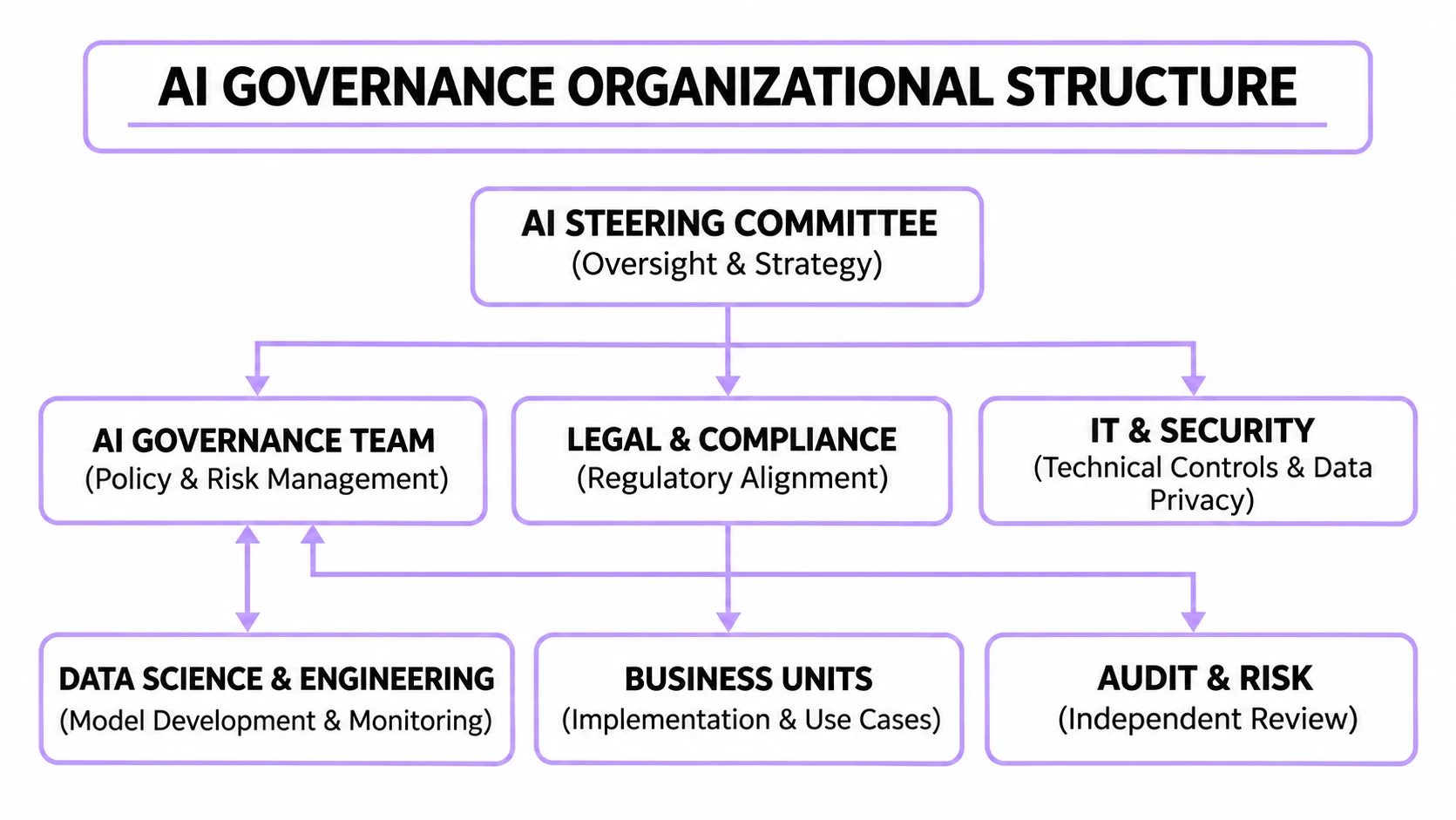
Five Forces Making Ethical AI Adoption Urgent
AI transformation is a problem of governance: The models work, but nobody has decided who answers for them.
Competitive Pressure Is Outpacing Governance
What is happening? Fear of falling behind pushes AI into production before anyone settles on how it is governed, and choices made under deadline become long-term exposure. Gartner expects up to 40% of enterprise applications to include task-specific AI agents by 2026, up from under 5% in 2025, so the list of systems to govern is growing.
Example: Air Canada's chatbot gave a passenger wrong bereavement-fare guidance, and the tribunal ordered the airline to pay compensation. Nobody owned what the bot said.
What to do:
- Add a one-page launch gate: Named owner, risk tier, rollback plan.
- Write down what you will not automate before a deadline forces the call.
AI Risk Escalates Faster Than Traditional Enterprise Risk
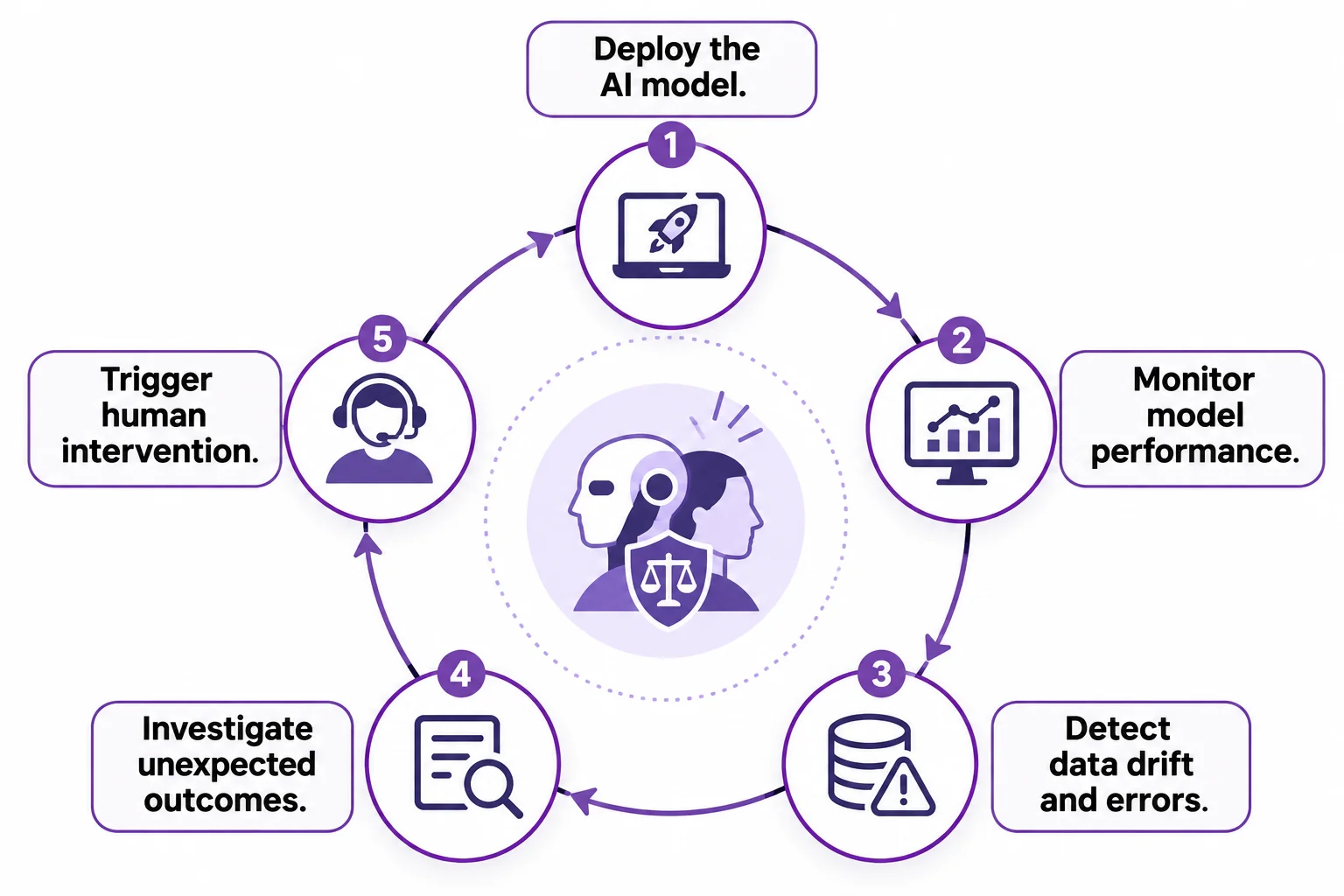
What is happening? A model can test well and still behave differently in real use, and data drift can shift outcomes with no code change.
Example: In 2021, Zillow wound down its home-buying business after its pricing models struggled in a fast-moving market, with an inventory write-down of roughly $300 million in one quarter.
What to do: Run AI risk management as a continuous process:
- Monitor after launch: Input drift, error rates, complaints, and human override rates.
- Set alert thresholds in advance, and name who can pause a system and how fast.
Investors and Markets Now Expect AI Oversight
What is happening? Questions about AI oversight now resemble earlier scrutiny of cybersecurity controls, and regulators police AI claims too.
Example: In 2024, the SEC settled 'AI washing' cases against two investment advisers for overstating their use of AI.
What to do: Keep a one-page oversight statement that answers three questions:
- Who owns AI risk at executive level?
- Which systems are high-risk, and how are they monitored?
- What happens, and who is told, when a model fails?
Employees Are Raising Ethical Questions Internally
What is happening? Employees already use AI tools and face ethical questions in real time. When boundaries are unclear, people stay quiet or decide alone, and shadow AI grows.
Example: In 2023, Samsung banned staff from using generative AI tools after an engineer reportedly uploaded confidential source code to ChatGPT.
What to do:
- Publish a short list of approved tools and sort data into three classes: Never enter, approved tools only, free to use.
- Give people one route to raise a concern, with a named owner who answers it.
Moral and Public Expectations of AI Are Rising
What is happening? Public debate centres on fairness and human dignity, and people now ask whether a system is right, which a clean compliance record does not settle.
Example: In 2023, the FTC banned Rite Aid from using facial recognition in stores for five years, after alleging the system falsely tagged consumers, particularly women and people of colour, as shoplifters.
What to do:
- Explain in plain language how AI-assisted decisions are made and where a human steps in.
- Give people affected by high-impact decisions a way to appeal.
US AI Regulation News in 2026: What Leaders Must Plan For
The short version, as of early November 2026: There is no comprehensive US federal AI law, Congress has not preempted state AI laws, and state rules are changing quickly.
Federal Direction and State-Level AI Laws
- December 2025: Executive Order 14365 asserted federal authority over state AI laws.
- January 2026: The AI Litigation Task Force was announced to challenge state laws.
- 20 March 2026: The White House's National Policy Framework asked Congress to preempt state laws it considers unduly burdensome.
- April 2026: The Justice Department joined xAI's challenge to the original Colorado AI Act, and a stipulated court order paused enforcement before the law was replaced.
- Since June 2026: A bipartisan pre-emption discussion draft has stalled in Congress. As Morgan Lewis notes, state laws stay operative until Congress acts.
Rules most likely to affect enterprises:
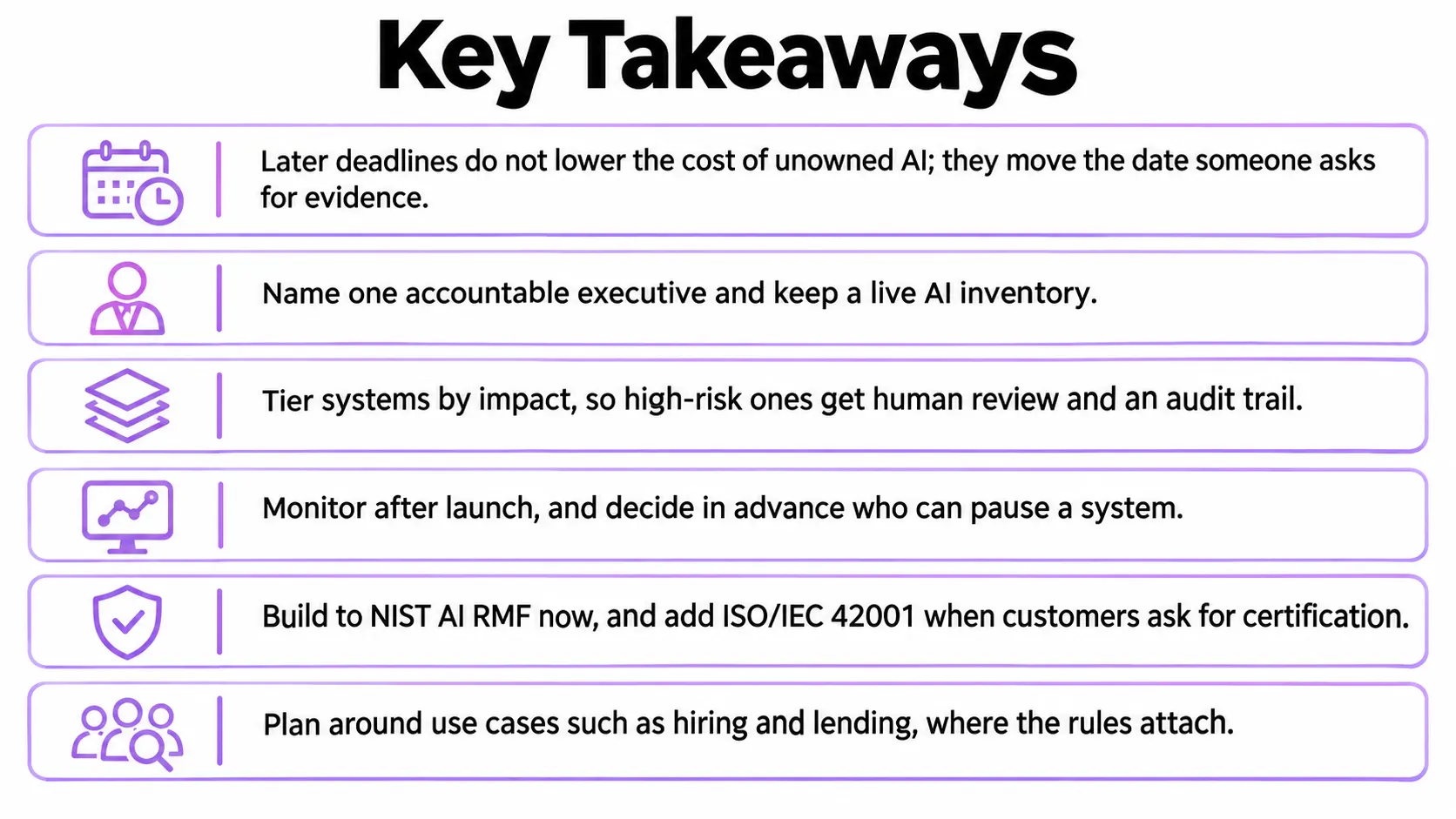
Rules attach to use cases such as hiring and lending, so plan by use case. Dates keep moving: Colorado's law was delayed, then replaced before it took effect. Later deadlines do not make unowned AI cheaper; they only change when someone asks for the evidence.
AI Compliance Frameworks: NIST AI RMF and Beyond
NIST AI RMF is the baseline US reference for AI compliance. Its four functions are Govern, Map, Measure, and Manage. Controls built to it hold up whichever way the federal-versus-state argument lands.
The EU AI Act is prescriptive, with legal risk classes. The UK takes a different route: As of June 2026, it has no standalone AI statute, and existing regulators apply shared principles sector by sector.
Our Take: Start with the one system a regulator, customer, or auditor would ask about first: Give it an owner, a tier, and evidence, then build the inventory outward. Do not wait for Congress.
AI Risk Assessment: Where Ethical AI Becomes Operational
Principles become real only when each AI system is assessed. The most useful idea is tiering: Not every system deserves the same scrutiny.
AI Risk Assessment and Audit Methods
Six steps cover the core AI governance best practices, and each leaves a document you can show an auditor:
- Name one accountable executive. Output: A named owner and charter.
- Set the boundaries you will tolerate. Output: A one-page list of prohibited uses.
- Inventory every AI system. Output: A register with owner, purpose, data, vendor, and users affected.
- Tier each by impact. Output: A tier against every register entry.
- Test the tiers that matter. Output: Accuracy, bias and privacy results on your own data.
- Document, monitor and audit. Output: Dashboards, an incident log and periodic AI audits.
Bias and Privacy Risks in Production AI
AI bias enters through training data, labelling and deployment context. In May 2025, a federal court let job applicant Mobley sue HR software maker Workday as a nationwide collective action over alleged age bias in its AI hiring tools, a claim Workday disputes. AI privacy risk follows a similar path: More data gets collected than needed, then reused.
Core controls:
- Bias testing across groups, before and after release.
- Data minimisation: Collect only what the use case needs.
- Human review and logs for decisions affecting health, jobs, or money, so each can be explained later.
How BuildNexTech Helps You Operationalise Ethical AI Governance
BuildNexTech gives engineering and leadership one shared view of every model and agent in production. It offers a low-code agent builder and enterprise-grade observability, with no single-model lock-in, so inventory, monitoring and audit evidence stay in one place that both teams can check at any time.
Spreadsheets and scripts are weak AI governance tools, fine for a first inventory but poor at evidence and monitoring. AI consulting firms offer AI strategy consulting and policy design, but not day-to-day controls. An AI governance platform runs those controls in production, and BuildNexTech's AI consulting services pair with it.
What a BuildNexTech Ethical AI Implementation Looks Like
A typical rollout runs in four phases, with timings that depend on how many systems you run:
- Day 1 to 3, discovery: Map every model and agent, name owners, tier by impact.
- Day 4 to 7, integration: Connect model endpoints, logging, and identity.
- Week 2 onward, deployment: Monitor the highest-risk system first, with a human reviewer.
- Ongoing, iteration: Track drift, override rates, and incidents.
At close, your team owns the inventory, evidence, and monitoring. Reviews then run in-house.
Conclusion
The urgency behind ethical AI does not depend on any one deadline. Colorado's law was delayed and replaced, and the EU moved its high-risk dates to 2027 and 2028, yet the work is unchanged: An owner, an inventory, and a risk tier. Meanwhile, AI agents are spreading into enterprise applications, so the list of systems to govern keeps growing.
Teams that start with the inventory can answer a board, an auditor, or a regulator with evidence. Teams that wait will build that evidence after a question or an incident forces it.
People Also Ask

What is AI governance, and how does it relate to ethics?
AI governance is the set of roles, controls, and evidence that keep AI accountable. AI governance and ethics work as a pair: Ethics sets the boundaries, governance enforces them daily.
How often should we repeat an AI risk assessment?
Repeat an AI risk assessment at every material change, such as a new model or data source, and on a schedule that matches the tier: Quarterly for high-risk systems.
How do we govern third-party and vendor AI models?
Third-party and vendor AI models should join the same inventory, with documentation, test results on your own data, and audit and incident-notification rights written into contracts.
What should a board ask about AI each quarter?
A board should ask about AI each quarter who owns each high-risk system, what changed, which incidents or overrides occurred, and whether the evidence would satisfy an external auditor.
Can a small company skip AI governance?
A small company should not skip AI governance entirely. Start light with a list of AI tools, one named owner, and rules on data, then scale controls with risk.