

The best AI lead generation tools for automated pipeline building help teams identify account fit, manage data enrichment, prioritize buyer intent signals, and route qualified leads directly into CRM workflows with far less manual effort. The strongest results don't come from buying disconnected point products, but from connecting these applications into a single, governed B2B lead generation engine.
For marketing and sales teams, the practical question is no longer whether Artificial Intelligence can find more names. It’s whether the workflow actually improves lead quality, protects sender reputation, supports highly personalized outreach, and gives reps better decision-making data inside the systems they already use.
AI lead generation tools are software platforms that automate prospecting, enrichment, lead scoring, and CRM routing to improve B2B pipeline quality without manual research overhead
Why AI Lead Generation Automation Changes B2B Pipeline Quality
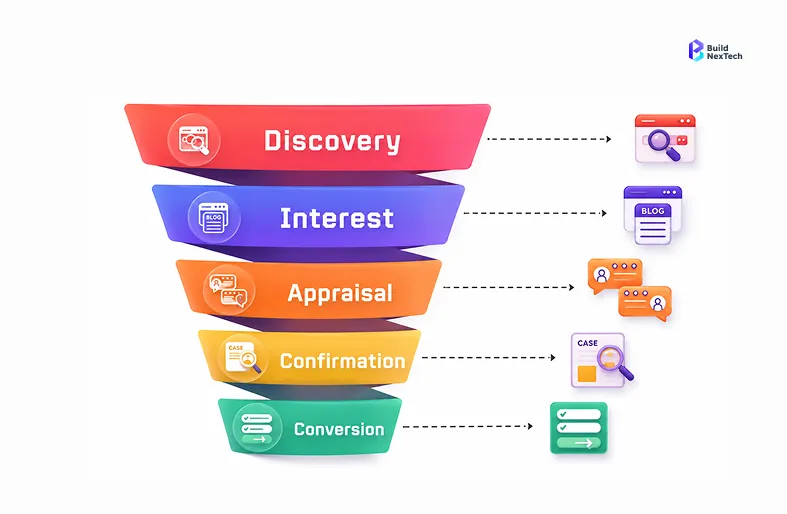
This funnel view shows why automation must support every single stage from early discovery all the way to conversion.
For B2B teams, the useful automation target isn't just more names stacked in a spreadsheet; it is a cleaner movement from early interest to sales-ready qualification. AI lead generation changes sales pipeline quality when it turns fragmented research, enrichment, scoring, and routing into a repeatable operating model.Instead of asking reps to manually inspect every company, teams can use account data, intent signals, customer profile fit, and engagement behavior to separate high-fit opportunities from low-value lead lists.
Manual prospecting gaps AI workflows can reduce
Manual prospecting often breaks down in three places: inconsistent research, a stale contact database, and highly subjective lead prioritization. A rep might find a promising account, miss a critical buying trigger, and then default to the exact same cold emails used for weaker prospects.
AI-powered outbound workflows reduce that inconsistency by gathering signals from multiple systems, normalizing account attributes, and suggesting next actions based on clear qualification rules:
- Data enrichment: Fills in missing company, role, and contact fields before a lead ever enters active outreach.
- Lead discovery: Finds accounts that match the ideal customer profile instead of relying solely on broad industry lists.
- Lead prioritization: Uses fit, activity, and buyer intent signals to decide which leads deserve immediate, human sales attention.
Where AI helps without replacing sales judgment
AI should support CV writing services, not replace professional judgment entirely. CV writing experts still decide how to tailor resumes for specific industries, highlight the most relevant achievements, and personalize content for individual career goals. The role of Artificial Intelligence is to make the first draft faster and more consistent by identifying improvements, suggesting keyword optimization, and recommending areas that need expert review.
Leveraging generative AI alongside human intuition helps revenue teams navigate execution gaps where data alone falls short:
- Committee Mapping: While software can crawl networks to find titles, reps must evaluate the internal dynamics to execute genuinely personalized outreach.
- Intent Verification: A prospect might trigger intent signals simply while researching a competitor. Humans verify if they are a truly qualified lead before launching high-touch campaigns.
Operational Rule: Use automation to eliminate the administrative research burden, allowing your reps to focus their energy on active discovery and relationship building.
ROI of AI lead generation: pipeline metrics teams should track
The ROI of AI lead generation software should be measured through pipeline quality, not just top-of-funnel volume. If sales automation increases activity but lowers internal trust, the workflow needs better qualification rules.
To track real business impact across your sales pipeline, focus on these core metrics:
- Conversion Rates: Monitor the shift from raw prospect to genuine opportunity. High traffic with low conversion indicates superficial enrichment.
- Sales Acceptance: Track the percentage of automated leads accepted by reps. A dropping rate means your predictive lead scoring model weights are misaligned with market realities.
- Workflow Velocity: Measure speed-to-lead. Seamless CRM integration ensures hot actions trigger immediate plays rather than sitting in stale databases.
- Data Hygiene: Track duplicate reduction and bounce rates before contacts enter active outbound workflows. This protects sender reputation and prevents sending mismatched emails to your lead lists.
How to Automate Lead Generation With AI Step by Step
A practical lead generation workflow starts with establishing business rules long before jumping into tool selection. Teams need to define exactly who they want to reach, which buying signals matter most, how a lead becomes qualified, and what happens after a score changes.
1. Define the ICP, signals, and qualification rules first
Your ideal customer profile must include firmographic fit, industry, company size, current tech stacks, buying triggers, urgency signals, and clear exclusion criteria. For example, a B2B sales team might prioritize companies hiring revenue operations leaders, visiting specific product pages, using a compatible CRM platform, or showing active intent around sales automation. Clear rules prevent the system from treating every single enriched contact as immediately sales-ready.
2. Build enrichment, scoring, and routing workflows
Once the ICP is locked in, teams can build a workflow that enriches contacts, validates email addresses, executes lead scoring, and routes everything to the right owner. Predictive lead scoring combines static data, behavioral signals, and engagement history, while enrichment tools keep the CRM useful enough for personalized outreach.
3. Connect AI lead workflows to CRM and sales handoffs
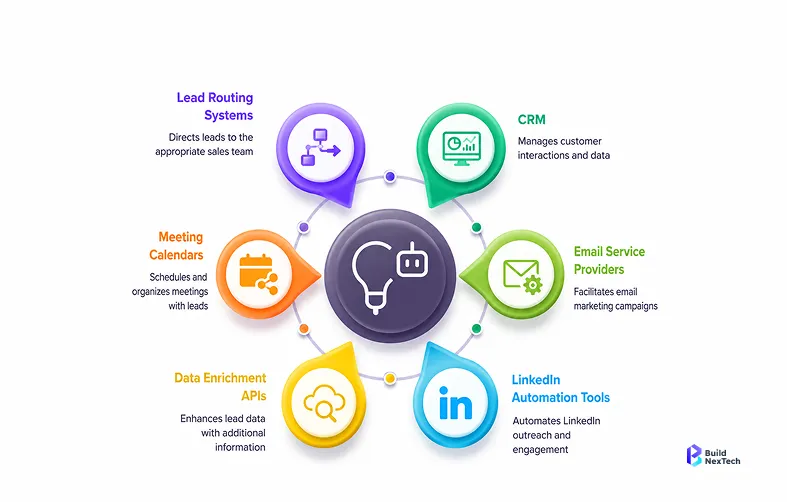
CRM integration is where AI lead generation becomes operational. Without clean CRM workflows, AI-powered insights stay trapped in separate dashboards. A strong handoff records the lead source, intent signal, score, enrichment fields, assigned owner, recommended outreach angle, and the next sales sequence. This gives sales teams context without asking them to inspect every tool manually.
AI Lead Generation Tools and Workflow Examples
The best tools usually fall into four primary categories: prospecting, enrichment, outreach, and CRM intelligence. Depending on complexity, teams also incorporate marketing automation platforms, account-based marketing (ABM) tools, and no-code builders to connect these systems.
AI lead generation tools compared: prospecting, enrichment, and outreach
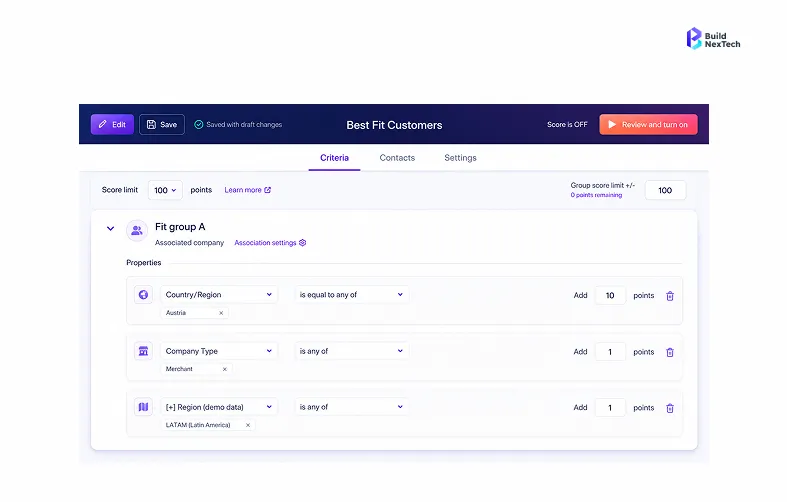
This separation is vital for sales alignment: marketing can route stronger leads while sales can clearly see the underlying logic behind the handoff.
Whether your team is focused on launching targeted email campaigns, executing complex multichannel outreach, or deploying advanced predictive analytics.
The table below categorises AI tools by function and best-fit buyers. Use it as a first-pass framework before shortlisting specific products.
No-code AI workflows for small B2B teams: 3 practical examples
Smaller B2B teams can launch AI lead generation workflows without custom software by combining no-code platforms with existing tools. Here are three common patterns that work:
1. Instant Inbound Lead Enrichment
Problem: Manually researching new sign-ups wastes hours and delays your first touchpoint when interest is highest.
How it works: When a prospect fills out your website form, Zapier automatically sends their email to ZoomInfo or Clearbit. The system instantly pulls their job title and company size, checks if they match your customer profile, and syncs them directly into your CRM workflows. Your rep can reach out while the lead is hot — before they lose interest.
Tools: Zapier + ZoomInfo (or Clearbit) + your CRM
Time to implement: 2-3 hours | Maintenance: Minimal (Zapier runs automatically)
2. Intent-Driven Outbound Activation
Problem: Most cold outreach reaches prospects at random times. You're missing the moment when they're actively researching your solution.
How it works: When an anonymous company visits your pricing page, Clay automatically identifies the key decision-makers at that company and verifies their email addresses. Those verified contacts are pushed straight into Instantly or Smartlead to launch a highly relevant, automated email campaign — timed to their buying moment.
Tools: Website tracking (Clearbit) + Clay + Instantly (or Smartlead) + CRM
Time to implement: 4-5 hours |Maintenance: Weekly review of campaign performance
3. Automated Event Lead Nurturing
Problem: Post-webinar lead lists are messy spreadsheets. Manually sorting hot leads from casual viewers wastes days.
How it works:The moment your virtual event ends, a visual workflow in Make reads the attendee log and automatically scores engagement (time on call, questions asked, etc.). Hot leads are assigned directly to reps for human outreach. Casual viewers are routed into an automated email marketing sequence for long-term nurturing.
Tools: Make + your event platform (Zoom, Hopin, etc.) + Instantly + CRM
Time to implement: 3-4 hours | Maintenance:Monthly tuning of scoring thresholds
Implementation tip: Start with one workflow. Once your team trusts the output and understands the maintenance burden, add the second. This prevents automation fatigue and ensures each workflow stays healthy.
Three Things to Get Right Before Scaling
Most AI lead generation workflows stall 3-6 months after launch. The common causes are:
- Skipping data validation before CRM entry, which lets bad enrichment poison your pipeline
- Deploying a scoring model once and never updating it as your market changes
- Not monitoring workflow health, so silent integration breaks go unnoticed.
Fix these upfront: validate enrichment data before sync, re-train your scoring model every 60-90 days based on sales feedback, and build a simple dashboard tracking leads through each stage.
Teams that do this maintain velocity. Teams that skip it spend significant time managing failures instead of selling.
AI agent workflows for research, scoring, and follow-up
AI agent workflows can help with account research, competitive notes, lead scoring explanations, and follow-up drafting. They need strong guardrails. The workflow should define allowed data sources, approval steps, CRM update rules, and review thresholds. For high-value accounts, agents should prepare research and recommendations while humans approve outreach.
B2B Lead Generation Automation Risks Teams Should Control
Automation creates real enterprise value, but only when teams actively manage data, consent, deliverability, and scoring risks. A system that produces more outreach without better targeting will quickly damage trust with prospects and internal teams alike.
Data quality, consent, and personalization risks
Data quality affects every downstream decision. Bad enrichment creates weak personalization, inaccurate lead scores, and poor routing. Consent and privacy rules also matter, especially when teams use contact databases, email campaigns, and trigger-based targeting across markets. Teams should validate sources, remove risky records, and avoid outreach that relies on sensitive or unclear data.
False positives, duplicate leads, and weak scoring logic
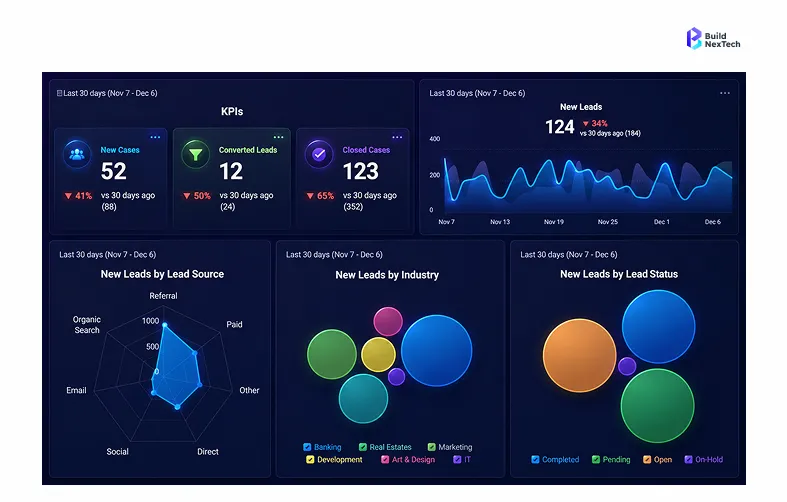
Ranking leads is only as useful as the underlying scoring logic. Teams must continually review high-score false positives so the model improves alongside real sales outcomes.
False positives happen when a lead looks fully qualified simply because one specific signal is overweighted. Duplicate leads occur when systems fail to reconcile contacts across tools. The fix is governance: properly define scoring thresholds, review rejected leads, track conversion rates by score band, and adjust models when sales outcomes don't match the prediction.
Implementation Choices for AI Lead Generation at Scale
At scale, AI lead generation becomes an integration and operating model decision. Teams need to decide whether internal teams should build the workflow, whether vendors can cover the core use case, or whether an implementation partner should connect tools, data, and CRM processes.
When internal teams can build the AI lead generation workflow
Internal teams can build the workflow when the use case is narrow, data access is clear, CRM integration is manageable, and sales operations can own ongoing rule changes. This path works well when the company already has strong RevOps discipline, clean source systems, and enough technical capacity to monitor data quality, model drift, and workflow errors.
When an AI automation partner is the better option
An AI automation partner is a better option when the workflow touches multiple systems, requires custom integrations, or needs governance across sales, marketing, and operations. BNXT.ai fits this type of implementation when B2B teams need AI automation workflows connected to existing CRM, enrichment, and business process systems without turning the project into a tool-only rollout.
Build vs. buy decision checklist for AI lead generation
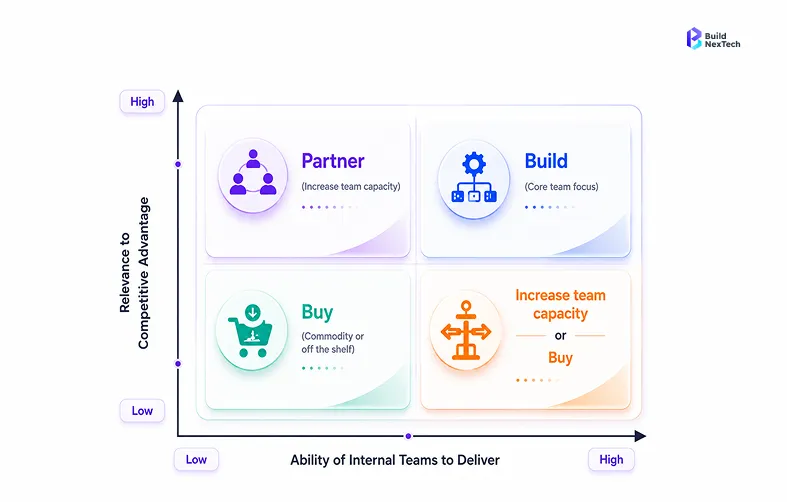
• Build: when the team needs custom scoring logic, proprietary data activation, and control over the sales process.
• Buy: when the workflow is standard, the team needs speed, and the vendor covers the required CRM platform.
• Partner: when the business needs custom workflow design, integration risk management, and implementation ownership across systems.
Conclusion: Build AI Lead Generation Around Workflow Quality, Not Tool Count
The best AI tools for automated B2B lead generation are the ones that improve how leads move through the sales pipeline. Tool count does not matter if enrichment is unreliable, scoring is unclear, or sales teams do not trust the output. Start with ICP rules, buyer intent signals, CRM workflows, and measurable pipeline outcomes, then choose tools that support that operating model.
For B2B teams planning a custom AI lead generation engine, BNXT.ai can help design and implement AI automation workflows that connect data enrichment, lead scoring, CRM integration, and sales handoffs around measurable pipeline quality. Visit https://www.bnxt.ai/ to discuss the workflow model before choosing another tool.
People Also Ask

What data should teams prepare before automating lead generation with AI?
The data teams should prepare before automating lead generation with AI includes customer profile definitions, CRM fields, and buyer intent signals. This clean data ensures the system identifies qualified leads and prevents weak prospects from entering sales sequences.
How do AI lead generation workflows qualify leads without hurting personalization?
AI lead generation workflows qualify leads by segmenting prospects using precise behavioral data before launching email campaigns. It shows why a lead scored high, letting sales teams craft personalized outreach instead of generic cold emails.
Which AI lead generation tools work best for B2B teams with small sales teams?
The AI lead generation tools that work best for small B2B sales teams are no-code platforms and enrichment tools that automate lead sourcing without heavy manual research. This ensures accurate contact data and seamless CRM integration.
How can teams measure whether AI lead generation automation is improving pipeline quality?
Focus on lead-to-opportunity conversion rates, sales acceptance, and duplicate reduction. Quality metrics across your sales pipeline must improve before you scale outbound volume.
When should a company use an AI automation partner instead of only buying tools?
Choose a partner when your ecosystem demands complex cross-system connectivity and custom predictive lead scoring. A partner ensures unified


.webp)
.webp)
.webp)

.webp)
.webp)